When a greenworks pressure washer soap is not working, the issue usually stems from using a high-pressure spray nozzle tip, undiluted detergent concentrate, or a stuck brass chemical injector ball valve.
Whether detergent is refusing to siphon from the onboard tank, your suction tube is drawing air, or your spray wand refuses to foam, this step-by-step repair guide walks you through every fast fix.
To fix a greenworks pressure washer soap not working, attach the low-pressure black soap nozzle tip (65° orifice) to the spray wand, dilute your detergent with warm water at a 10:1 ratio, and verify the suction tube is submerged without air leaks.
If soap still won’t siphon, unstick the internal brass injector ball check valve using a small pin or Allen key to restore venturi vacuum flow.
Fixing a Greenworks Pressure Washer Soap Dispenser That’s Not Working
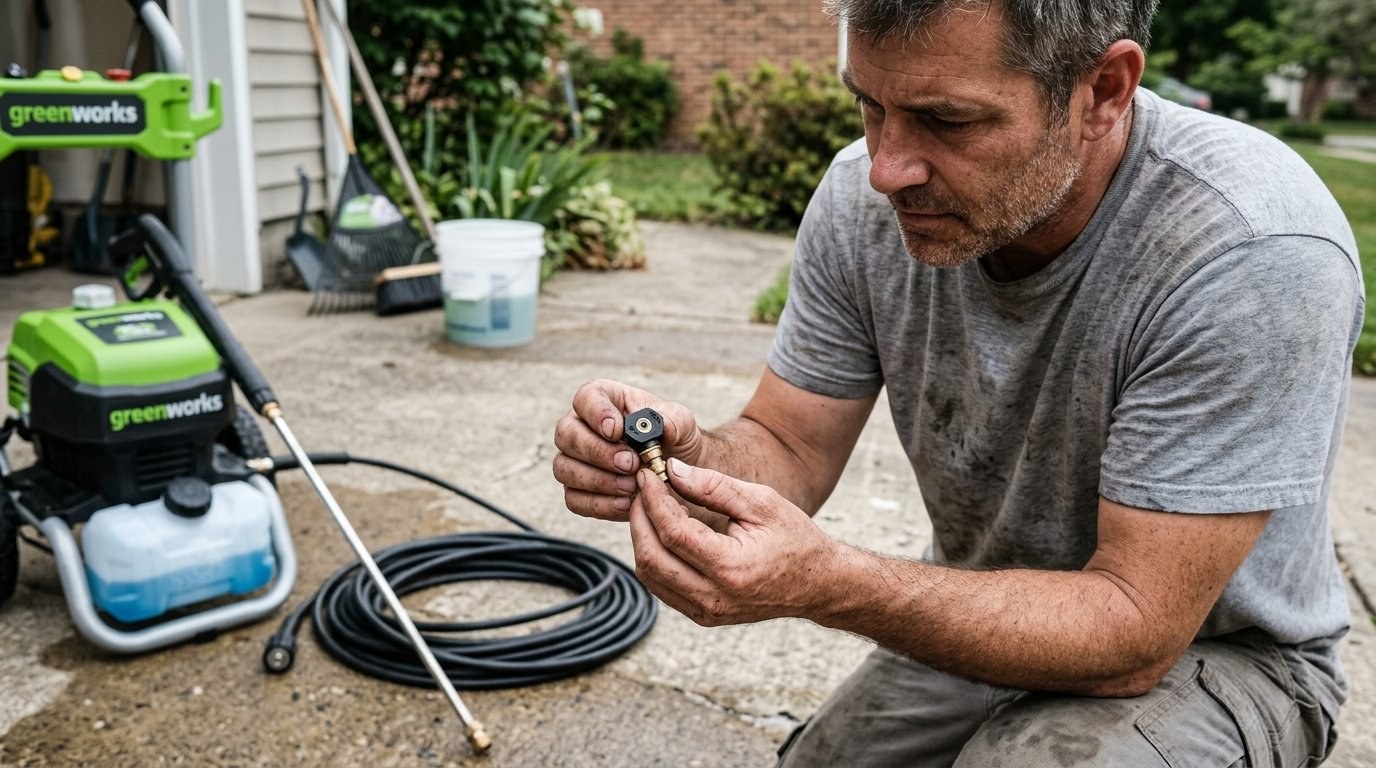
If your Greenworks pressure washer soap isn’t dispensing, it’s usually due to incorrect nozzle use, detergent issues, or clogs.
Here’s how to diagnose and fix it:
- Use the correct nozzle
Greenworks soap siphons via a venturi system in the pump head. This only works with low-pressure soap nozzles (black brass tip, ~65° orifice).
High-pressure tips (green/yellow/red) create backpressure that shuts off the vacuum. Always attach the low-pressure soap nozzle before starting.
- Dilute detergent properly
Never use undiluted concentrate. For most cleaning, mix 1 part soap to 10 parts water (10:1 ratio).
Use only pressure-washer-specific detergent; thick household soaps can clog the system.
- Check for clogs
Soap applicator: Over time, soap residue or dirt can block the spray tip. Clean with a soft brush and water.
Soap tube: Ensure it’s fully submerged in the soap tank and free of debris.
Foam cannon: If using, soak the brass head in white vinegar to clear the stainless mesh.
- Inspect the suction tube and injector
Make sure the external suction tube is fully submerged without air leaks.
If the brass injector ball check valve is stuck, gently probe it with a small pin or Allen key to restore vacuum flow.
- Verify water supply and pressure
A weak or interrupted water flow can prevent soap siphoning. Ensure the inlet is open and water pressure is adequate.
- Test the system
Attach the low-pressure soap nozzle, fill the tank with diluted detergent, and run the washer.
If soap still won’t siphon, repeat the nozzle check and injector cleaning.
- Switch to low-pressure soap nozzle (black 65° tip).
- Dilute detergent 10:1 with warm water.
- Clean applicator tip and intake suction tube.
- Check for air leaks in vinyl suction hose.
- Inspect and free any stuck injector ball valve parts.
Following these steps should restore soap dispensing in most Greenworks models. If the problem persists after cleaning and nozzle changes, the pump head or injector may need replacement.
Greenworks Pressure Washer Soap Dispenser Troubleshooting & Causes
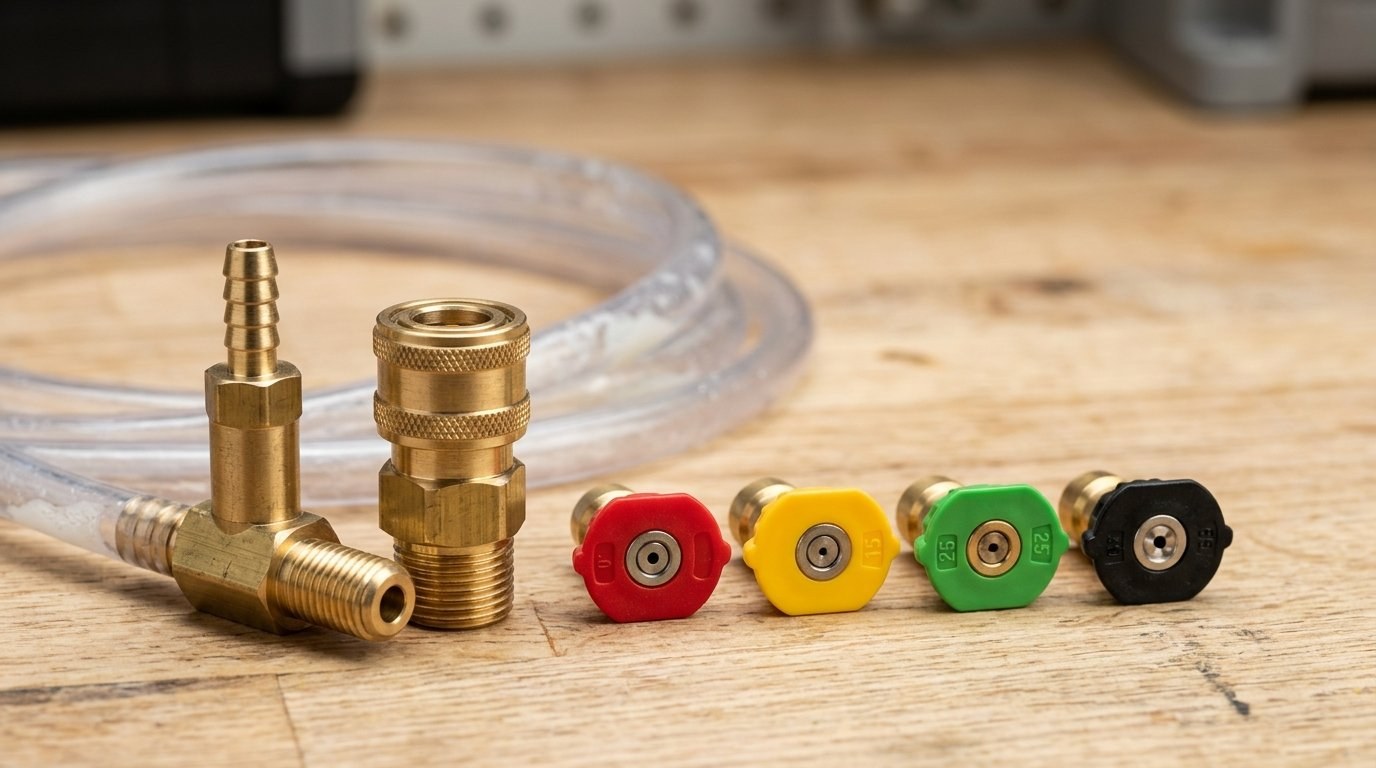
Greenworks pressure washers utilize a venturi siphon system integrated into the pump head or brass chemical injector.
As water passes through a narrowed internal nozzle inside the pump, it creates a low-pressure vacuum that pulls liquid soap up through the detergent suction tube.
However, this vacuum only creates sufficient suction when backpressure inside the spray wand is extremely low.
Never attempt to spray soap using green (25°), yellow (15°), or red (0°) high-pressure nozzle tips.
High-pressure tips create heavy backpressure inside the wand, which automatically shuts off the venturi vacuum in the pump head.
Soap will ONLY siphon when the low-pressure black brass soap nozzle tip (or a low-pressure soap applicator) is attached to the wand.
| Symptom | Soap System Type | Primary Cause | Fast Fix |
|---|---|---|---|
| No Soap Siphoning / Tank Full | Onboard Tank & Tube | Using high-pressure nozzle (green/yellow tip) | Attach low-pressure black soap nozzle tip (65° orifice) |
| Soap Siphon Weak / Watery Spray | Onboard Tank | Undiluted / Viscous detergent concentrate | Dilute detergent with warm water at 10:1 water-to-soap ratio |
| Motor Runs But No Soap Vacuum | Brass Injector Barb | Stuck stainless steel ball check valve | Gently probe brass injector barb with pin tool to free stuck ball |
| Air Bubbles / Suction Line Gurgling | External Siphon Hose | Air leak at barb or cracked vinyl tube | Trim stretched hose ends; ensure airtight fit onto brass barb |
| Foam Cannon Not Foaming | Greenworks Foam Cannon | Clogged mesh stainless wire foamer mesh | Soak foam cannon brass head in white vinegar; replace mesh disc |
How to Troubleshoot a Greenworks Pressure Washer Soap Dispenser (Step-by-Step Diagnostic Guide)
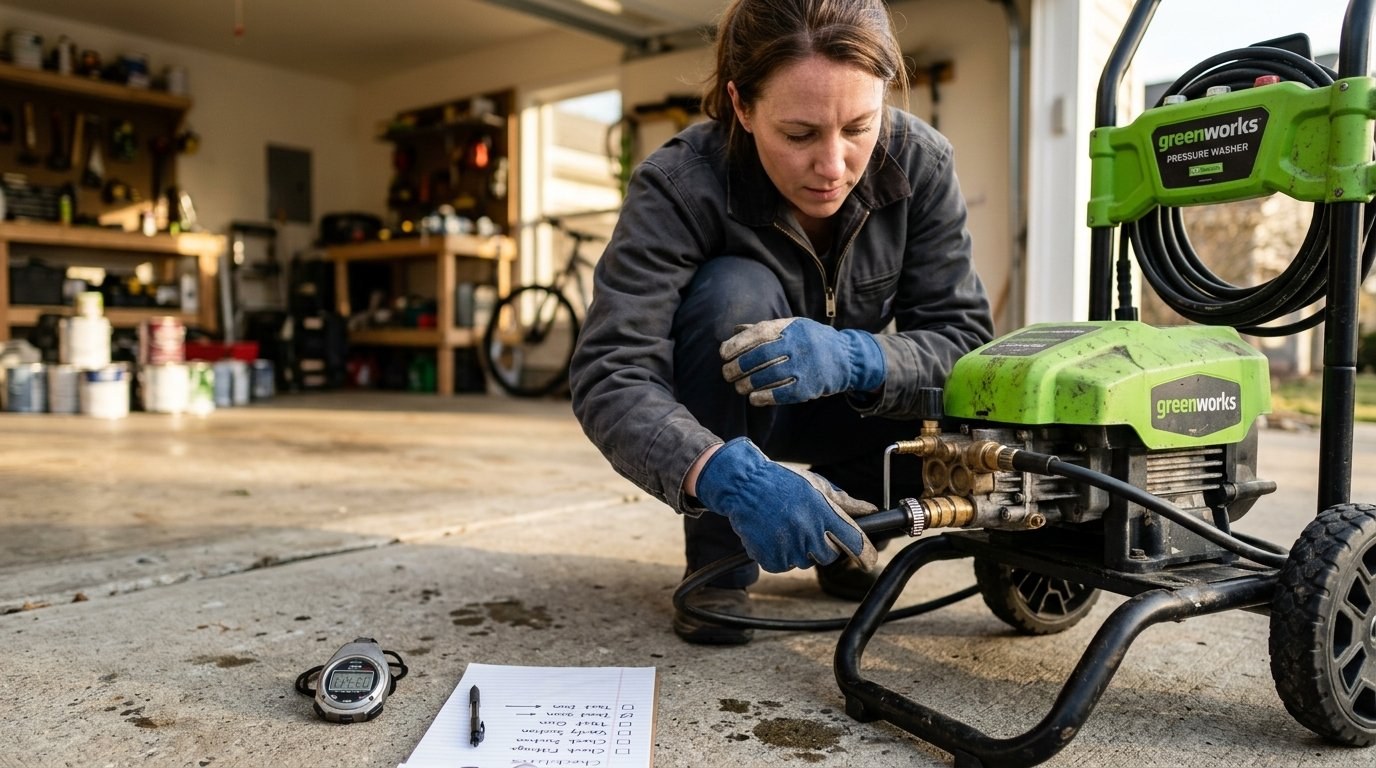
Systematic troubleshooting prevents unnecessary part purchases.
Follow this 4-step diagnostic sequence to pinpoint your Greenworks soap fault in under 5 minutes:
- Step 1: Verify Spray Wand Nozzle Selection
Inspect the quick-connect tip inserted into the end of your spray wand.
If a red (0°), yellow (15°), or green (25°) tip is installed, swap it for the black soap nozzle tip (65° orifice).
- Step 2: Check Detergent Viscosity & Fluid Level
Inspect the soap solution inside the onboard tank or container.
Thick, undiluted car wash soap or gel cleaners cannot be drawn through the narrow siphon hose. Verify the soap is diluted with warm water.
- Step 3: Inspect Suction Hose & Weighted Tank Filter
Examine the clear vinyl suction hose connecting the soap tank to the pump.
Ensure the hose is pushed tightly onto the brass intake barb and that the weighted filter screen at the bottom of the tank is free of dried soap crust.
- Step 4: Test Venturi Brass Injector Ball Check Valve
Disconnect the suction hose from the brass barb on the pump manifold.
Turn off water, release line pressure, and insert a small 2mm Allen key or pin into the barb opening to verify that the internal spring-loaded check ball moves freely.
How to Fix Greenworks Pressure Washer Soap Injector: Step-by-Step Repair Guide
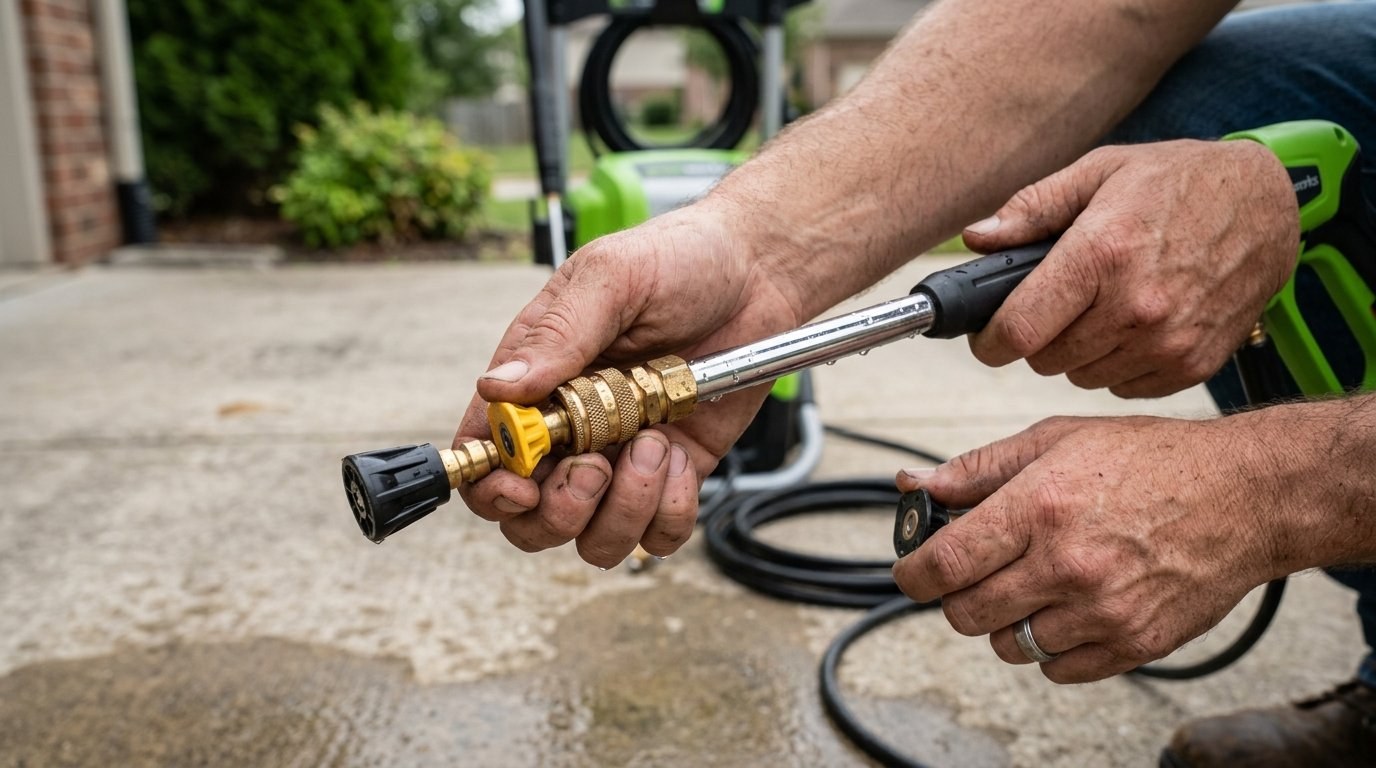
Fix 1: Installing the Low-Pressure Black Soap Nozzle Tip
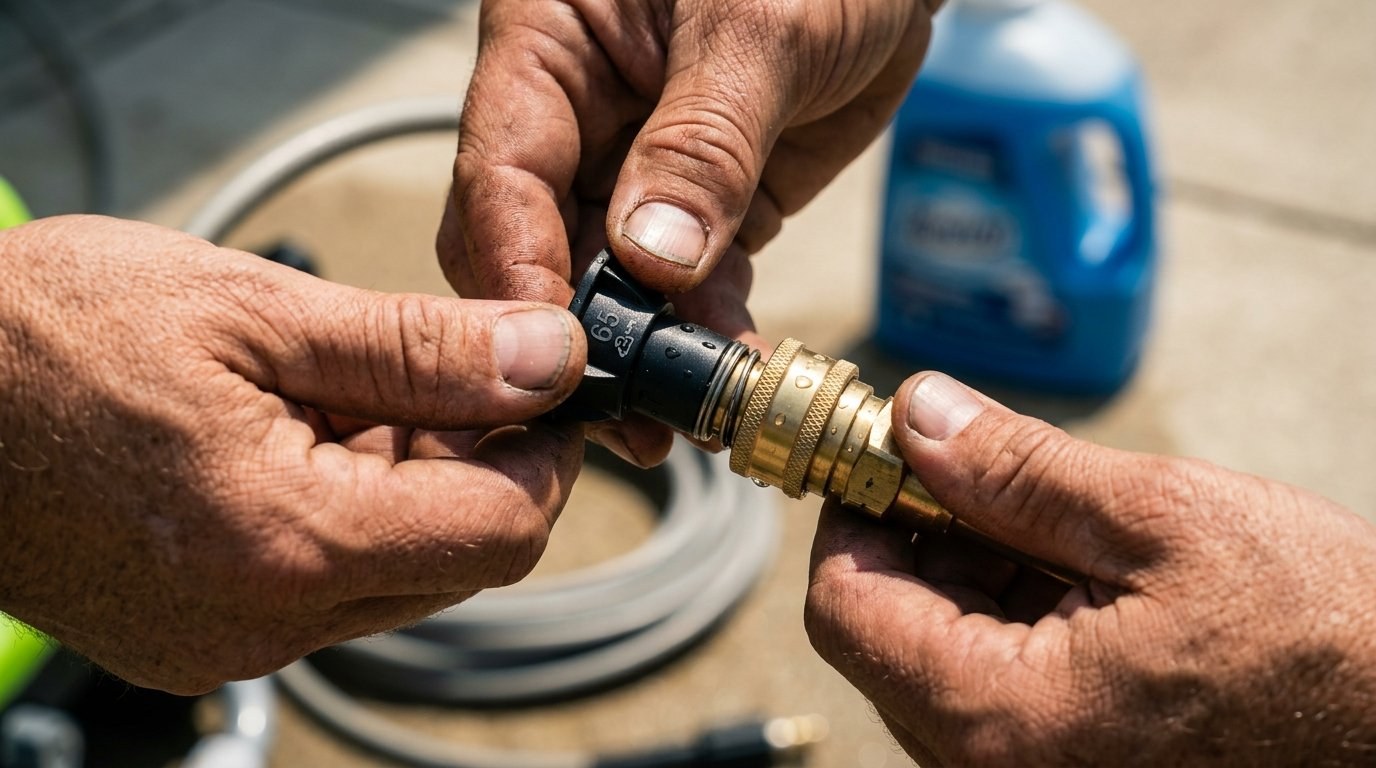
Because the venturi siphon relies on low line pressure, using the correct nozzle tip is the most critical requirement for Greenworks soap operation:
- Turn off the pressure washer motor switch and trigger the spray gun to release water pressure.
- Pull back the brass collar on the wand’s quick-connect coupler and remove any colored high-pressure tip (0°, 15°, 25°, or 40°).
- Insert the black soap nozzle tip (65° brass orifice) into the quick-connect coupler until the collar clicks firmly into place.
- Turn on the machine and squeeze the trigger. Soap will immediately begin siphoning from the tank into the low-pressure water stream.
Fix 2: Diluting Thick Pressure Washer Detergent (10:1 Water Ratio)
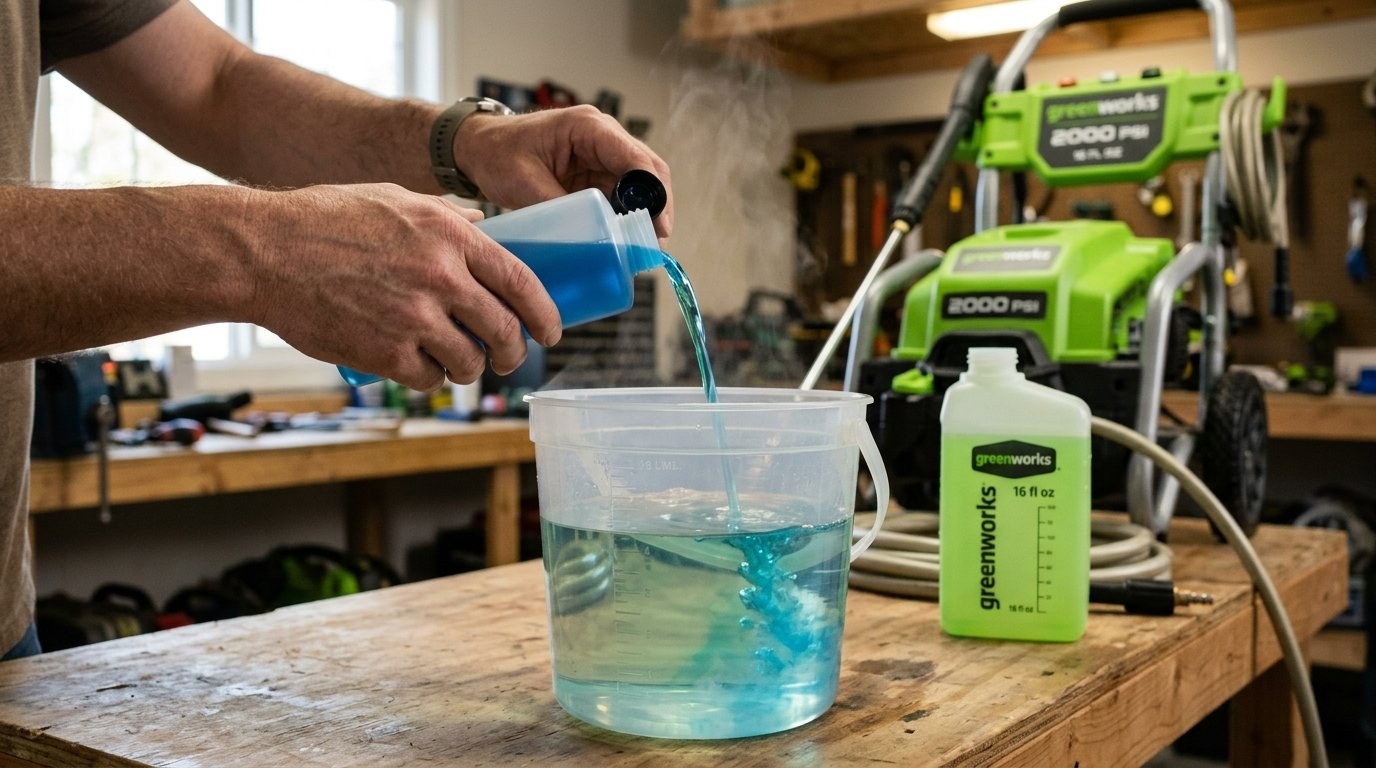
Pouring concentrated car wash soap or household liquid dish soap directly into the Greenworks soap tank creates a thick gel that overpowers the delicate venturi vacuum.
Always dilute pressure washer soap with warm water before pouring it into the tank.
- Empty the heavy or gelled soap solution out of the Greenworks detergent tank.
- In a separate bucket, mix 10 parts warm tap water to 1 part pressure washer liquid detergent concentrate.
- Pour the diluted mixture into the soap reservoir and stir gently. Warm water breaks down soap film inside the intake line and restores smooth siphoning.
Fix 3: Unsticking the Internal Brass Injector Ball Check Valve
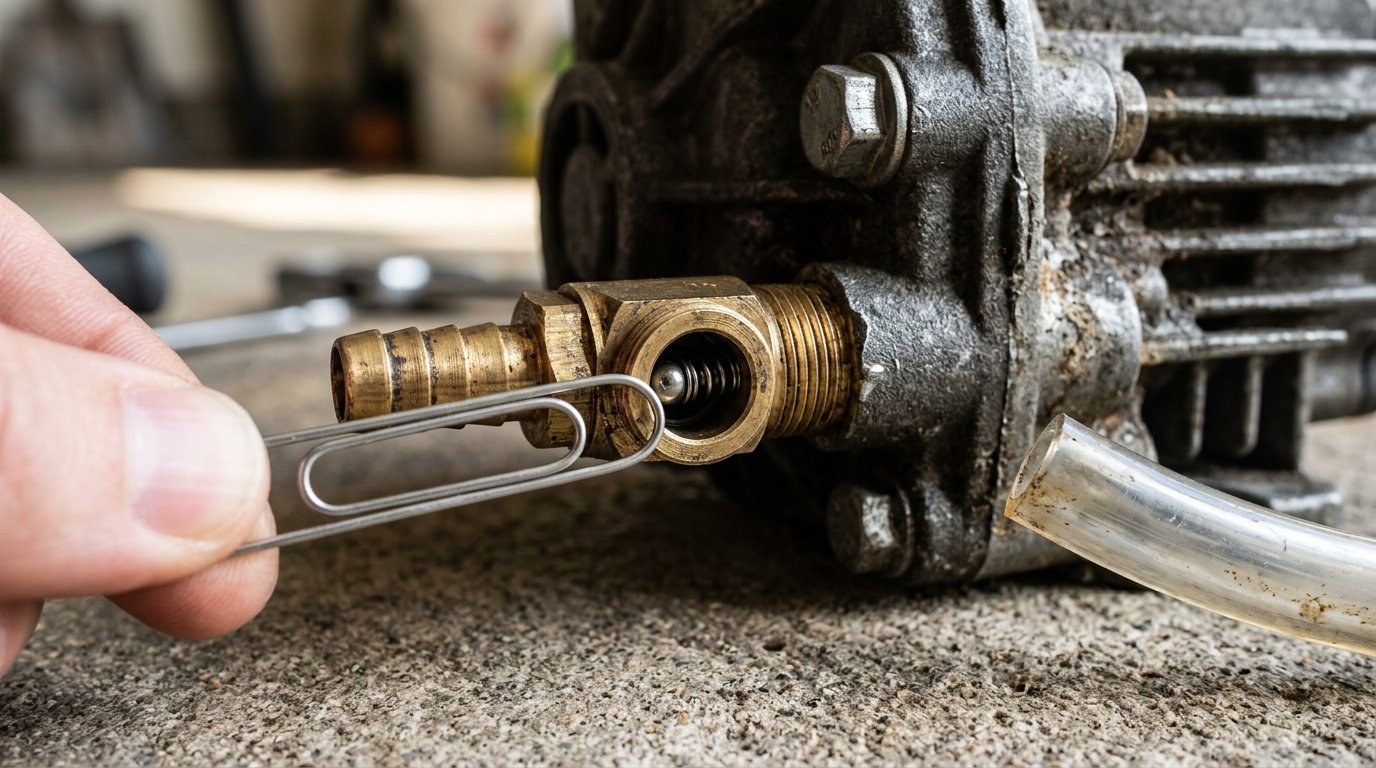
Inside the brass chemical injector barb on your Greenworks pump head is a small stainless steel ball held by a light spring.
Dried soap residue causes this ball to stick to its rubber seat, blocking all suction.
Probing it gently with a pin frees the valve instantly without replacing the pump.
- Turn off the pressure washer, disconnect power/gas engine, and turn off the garden hose tap. Squeeze the wand trigger to dump all water pressure.
- Pull the clear vinyl suction hose off the brass chemical injector barb on the pump manifold.
- Insert a small unbent paperclip, thin needle, or 2mm Allen key into the center hole of the brass barb.
- Gently press inward until you feel the spring-loaded steel ball depress roughly 1/8 inch. Repeat 3–4 times until the ball bounces freely on its spring.
- Reattach the suction hose, turn on water, and test soap flow.
Fix 4: Sealing Suction Hose Air Leaks & Cleaning Intake Filter Screen
- Inspect the ends of the clear vinyl suction tubing for cracks, split ends, or loose fitting around the brass barb.
- If the tube end has stretched or hardened, use a utility knife to snip off 1/2 inch of damaged hose, then push the fresh hose end tightly over the barb.
- Pull the weighted filter screen out from the bottom of the soap tank. Rinse away dried soap scale under hot tap water, or soak the screen in white vinegar for 15 minutes before reinstalling.
Fix 5: Unclogging Greenworks Foam Cannon Attachments
If you are using a Greenworks high-pressure foam cannon attachment, soap failure is caused by hardened soap inside the internal brass orifice jet or stainless steel wire foamer mesh disc:
- Unscrew the plastic soap bottle from the brass foam cannon body.
- Unscrew the front spray nozzle casing to access the internal stainless steel wire mesh disc.
- Soak the brass body and wire mesh disc in a bowl of 50/50 hot water and white vinegar for 30 minutes to dissolve mineral scale and dried detergent.
- Unscrew the rear 1.1mm brass orifice jet with a flathead screwdriver, clear the tiny center hole with a thin pin, and reassemble.
Stihl, DeWalt & Greenworks Machine Motor Maintenance
If your pressure washer motor is stalling, surging, or failing to start alongside soap dispenser issues, explore our comprehensive brand repair guides across the site:
- For electric and gas engine troubleshooting, read our main Greenworks Pressure Washer Troubleshooting Guide.
- For motor breaker and pump unloader diagnostics, consult our DeWalt Pressure Washer Repair Guide.
- For RE electric motor GFCI resets, view our Stihl Pressure Washer Troubleshooting Guide.
- For triplex pump housing checks, read our Blue Clean Pressure Washer Repair Guide.
Top Causes & User Mistakes to Avoid to Prevent Soap Siphon Failure
Avoiding common operator mistakes will keep your Greenworks detergent injector working reliably:
- Attempting to Spray Soap with High-Pressure Tips: Always remember that yellow (15°), green (25°), and red (0°) tips shut off venturi vacuum suction. Only the black 65° tip pulls soap.
- Using Liquid Dish Soap or Laundry Detergent: Household dish soaps contain heavy gelling agents that clog small injector ports. Use only formulated pressure washer liquid soaps.
- Leaving Soap Solution in the Tank After Use: Allowing soap to sit in the tank and suction line for weeks causes water to evaporate, leaving behind a hard crust that glues the injector ball valve shut.
- Loose Suction Hose Connections: A cracked or loose suction hose sucks air instead of liquid soap, causing gurgling without detergent flow.
What to Do If Your Greenworks Soap Dispenser Still Won’t Work (Foam Cannon Upgrade Guide)
If you have cleared all clogs and your built-in venturi injector still fails to pull soap, consider upgrading to an aftermarket high-pressure Foam Cannon attachment:
- Why Foam Cannons Outperform Onboard Soap Tanks: Built-in pressure washer soap tanks mix soap with low-pressure water, creating a thin, watery soap spray. High-pressure foam cannons connect directly to the end of the spray wand, mixing soap with high-pressure water and air to produce thick foam that clings to surfaces.
- Easy Quick-Connect Attachment: Greenworks spray wands use standard 1/4-inch brass quick-connect fittings. Simply snap off your spray nozzle tip and snap on a 1/4-inch quick-connect foam cannon—bypassing internal pump soap tanks completely.
- Injector Barb Replacement: If you prefer using the built-in tank, individual replacement brass chemical injector barbs (including a fresh stainless steel ball and spring) cost under $10 and unscrew directly from the pump manifold with a 12mm wrench.
How to Prevent Future Greenworks Soap Injector Clogs (Pro Maintenance Protocol)
Protect your Greenworks soap dispenser from future blockages by adopting this 60-second end-of-day cleaning routine:
- Run Clear Warm Water After Every Job: Before storing your pressure washer, empty remaining soap solution from the tank, fill with 2 cups of clean warm tap water, attach the black soap tip, and spray for 60 seconds until clear water exits the wand. This flushes soap film out of the intake hose and pump barb.
- Winterization Flush: Before winter storage, flush clear water through the line and store the unit in a climate-controlled garage to prevent residual moisture from freezing inside the injector body. For more information on American power equipment manufacturing, read our guide on What Power Tool Brands Are Made in the USA.
Frequently Asked Questions (FAQs)
Why is my Greenworks pressure washer not pulling soap from the tank?
The most common cause is using a high-pressure nozzle tip (green 25° or yellow 15°).
Greenworks pressure washers require the **low-pressure black soap nozzle tip (65° orifice)** to create the venturi vacuum needed to pull soap. Additional causes include thick undiluted detergent, a stuck brass injector ball valve, or air leaks in the suction hose.
Which nozzle do I use to spray soap on a Greenworks pressure washer?
Always use the **black 65° low-pressure soap nozzle tip**.
If your Greenworks model uses an adjustable spray wand, twist the nozzle collar to the *LOW* or *SOAP* position to activate soap siphoning.
Can I use regular Dawn dish soap in a Greenworks pressure washer?
No, you should not use regular liquid dish soap in a Greenworks pressure washer soap tank.
Dish soap contains heavy thickening agents that gel inside the narrow suction tube and glue the internal brass injector ball check valve shut. Use only formulated liquid pressure washer detergent diluted with water.
How do I unstick the soap injector check valve on a Greenworks washer?
To unstick the valve, turn off the machine, disconnect the water hose, and squeeze the spray trigger to release line pressure.
Pull the clear suction hose off the brass barb on the pump head, insert a small pin or paperclip into the barb center, and push gently to free the spring-loaded steel ball.
Greenworks Soap Dispenser Repair Summary & Key Takeaways
Troubleshooting a Greenworks pressure washer soap dispenser is straightforward once you ensure the machine is operating under low pressure.
By using the black 65° soap nozzle tip, diluting soap 10:1 with warm water, unsticking the brass injector ball valve, and flushing the suction hose with clear water after use, you can keep your Greenworks washer soap system functioning perfectly for years.
- Always attach the low-pressure black soap nozzle tip (65°) when spraying detergent.
- Dilute thick pressure washer detergent 10:1 with warm water to maintain proper liquid viscosity.
- Unstick frozen brass injector ball valves using a thin pin or Allen key.
- Flush the soap line with clear warm water for 60 seconds after every cleaning project.
- Consider upgrading to a 1/4-inch quick-connect foam cannon for superior high-pressure foaming.