Portland 1750 PSI pressure washer not working? The problem usually comes from a tripped GFCI, restricted water supply, trapped air, or a clogged inlet filter or nozzle.
Start with the quick checks below to restore power and pressure safely before considering an internal repair.
Portland 1750 PSI pressure washer not working? Check the grounded outlet and reset the cord-mounted GFCI first. Then open the water supply fully, straighten both hoses, purge trapped air, and clean the inlet filter and nozzle. Stop using the washer if water leaks from the housing or the GFCI repeatedly trips.
Fixing a Portland 1750 PSI Pressure Washer That’s Not Working
Portland 1750 PSI pressure washer not working? If it will not start, stops suddenly, or produces low or no pressure, the problem is usually related to the power source, water supply, a clogged filter or nozzle, or an internal fault.
- Check the power source
- Use a working, grounded 120V outlet.
- Press RESET on the cord-mounted GFCI, press TEST, and then press RESET again.
- Make sure the power switch is on and the power cord is secure and undamaged.
- Inspect the water supply
- Open the faucet fully and remove kinks, leaks, or blockages from the garden hose.
- Straighten and completely uncoil the supply hose and high-pressure hose.
- With the motor off, hold the trigger until water flows steadily to purge trapped air.
- Clean the inlet filter and nozzle
- Turn off and depressurize the washer, then remove and rinse the inlet filter.
- Attach the nozzle correctly and clear dirt or mineral buildup with the supplied nozzle-tip cleaner.
- Use approved pressure-washer detergent and make sure the detergent bottle is clean and installed correctly.
- Check for leaks or internal faults
- If water leaks from the housing or the GFCI repeatedly trips, stop using the washer.
- Worn valves, seals, switches, or carbon brushes require a qualified technician.
- Release the trigger safety lock
- If the trigger will not depress, release the safety lock at the bottom of the spray gun.
- Remove mineral buildup
- Clean deposits from the nozzle and water inlet if performance has declined over time.
- Rinse the inlet thoroughly before using the pressure washer again.
When to seek service: Contact a qualified technician if the washer still will not operate, water leaks from the housing, the GFCI repeatedly trips, or pressure remains unstable after the filter and nozzle are clean.
Tip: Cleaning the filter and nozzle, inspecting hoses, draining the washer, and storing it above freezing can prevent many recurring problems.
Why Your Portland 1750 PSI Pressure Washer Is Not Working
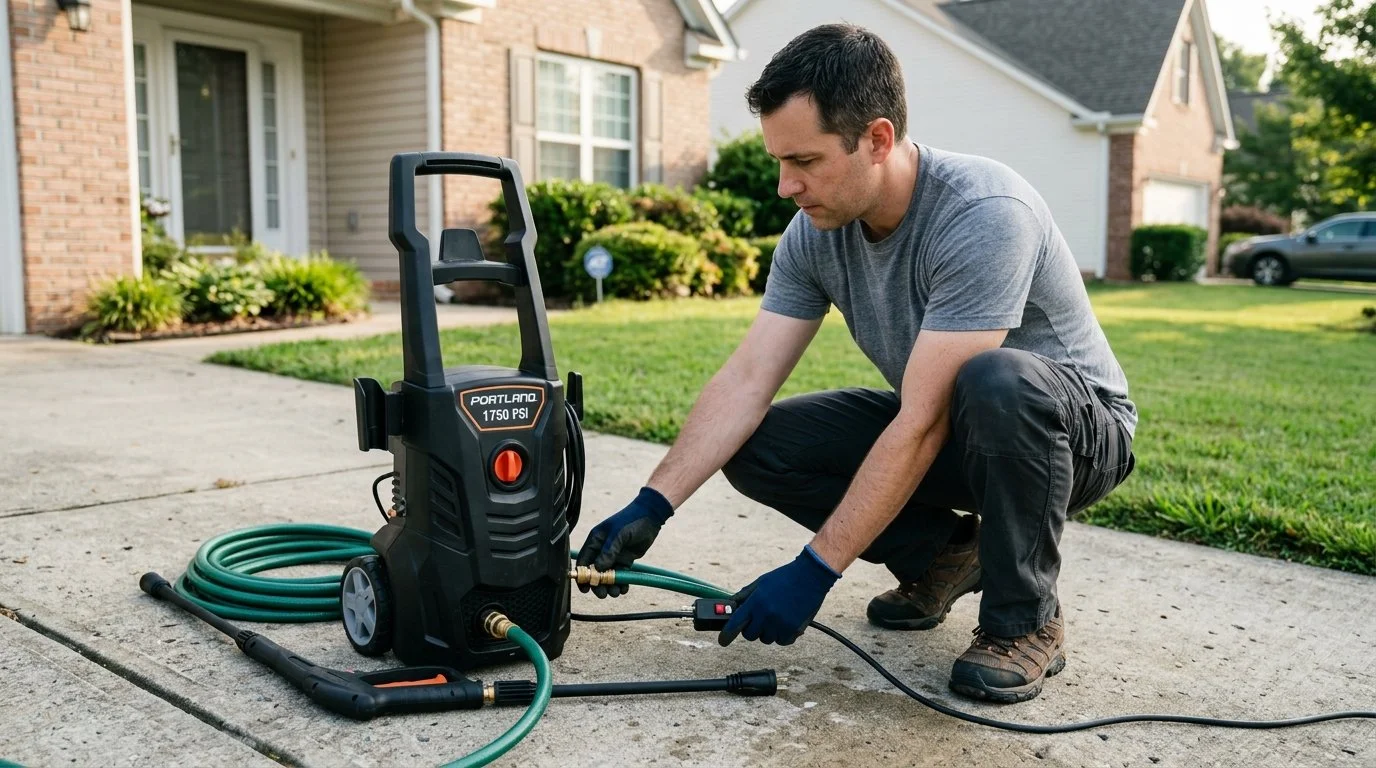
Portland 1750 PSI pressure washer not working? Start with the GFCI and outlet, then check water flow, trapped air, the inlet filter, and the nozzle.
- No power: Test the grounded outlet and reset the cord-mounted GFCI.
- No pressure: Open the faucet fully, straighten the hoses, and purge trapped air.
- Weak or pulsing pressure: Clean the inlet filter and nozzle, then tighten water connections.
- Stops suddenly: Stop using the washer if the GFCI repeatedly trips or water leaks from the housing.
- Trigger locked: Release the safety lock at the bottom of the spray gun.
- Performance decline: Remove mineral buildup or arrange service for internal wear.
Portland 1750 PSI Troubleshooting by Symptom
| Symptom | Most Likely Checks | First Safe Action |
|---|---|---|
| Washer will not start | Outlet, breaker, GFCI, power switch | Test the outlet and reset the GFCI |
| Washer stops suddenly | Tripped GFCI or water leaking from housing | Turn it off and inspect before resetting |
| Water flows with little pressure | Restricted supply, air, filter, or nozzle | Open the faucet and purge the system |
| Pressure pulses or varies | Air leak, hose restriction, dirty filter or nozzle | Tighten connections and clean restrictions |
| Trigger will not depress | Trigger safety lock engaged | Release the lock below the spray gun |
| Detergent will not dispense | Wrong detergent or dirty bottle assembly | Rinse the bottle and use approved detergent |
| Performance declines over time | Mineral buildup or internal wear | Clean mineral deposits; seek service if unresolved |
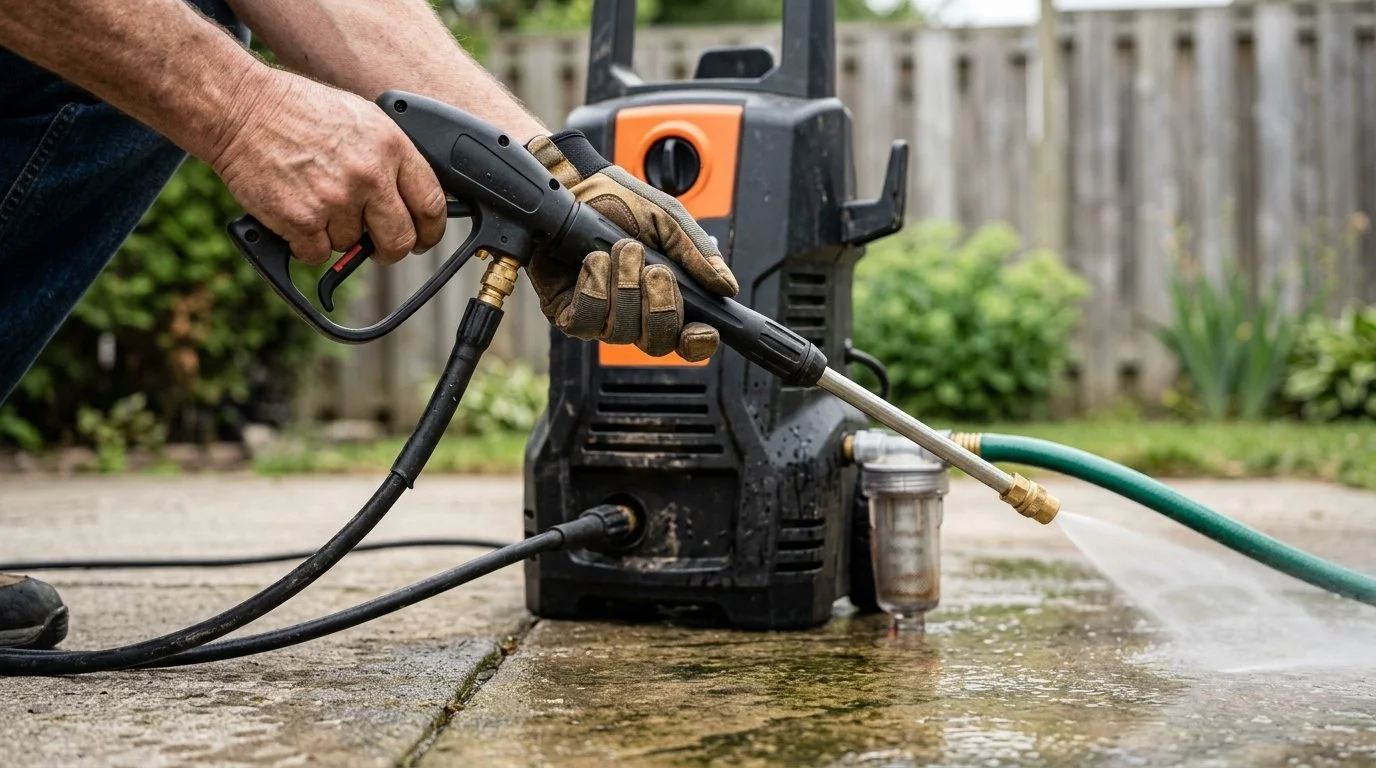
The pump runs only while the spray-gun trigger is pressed. The motor stopping when you release the trigger is normal automatic-stop behavior, not a fault.
Before You Troubleshoot the Portland 63254 or 63255
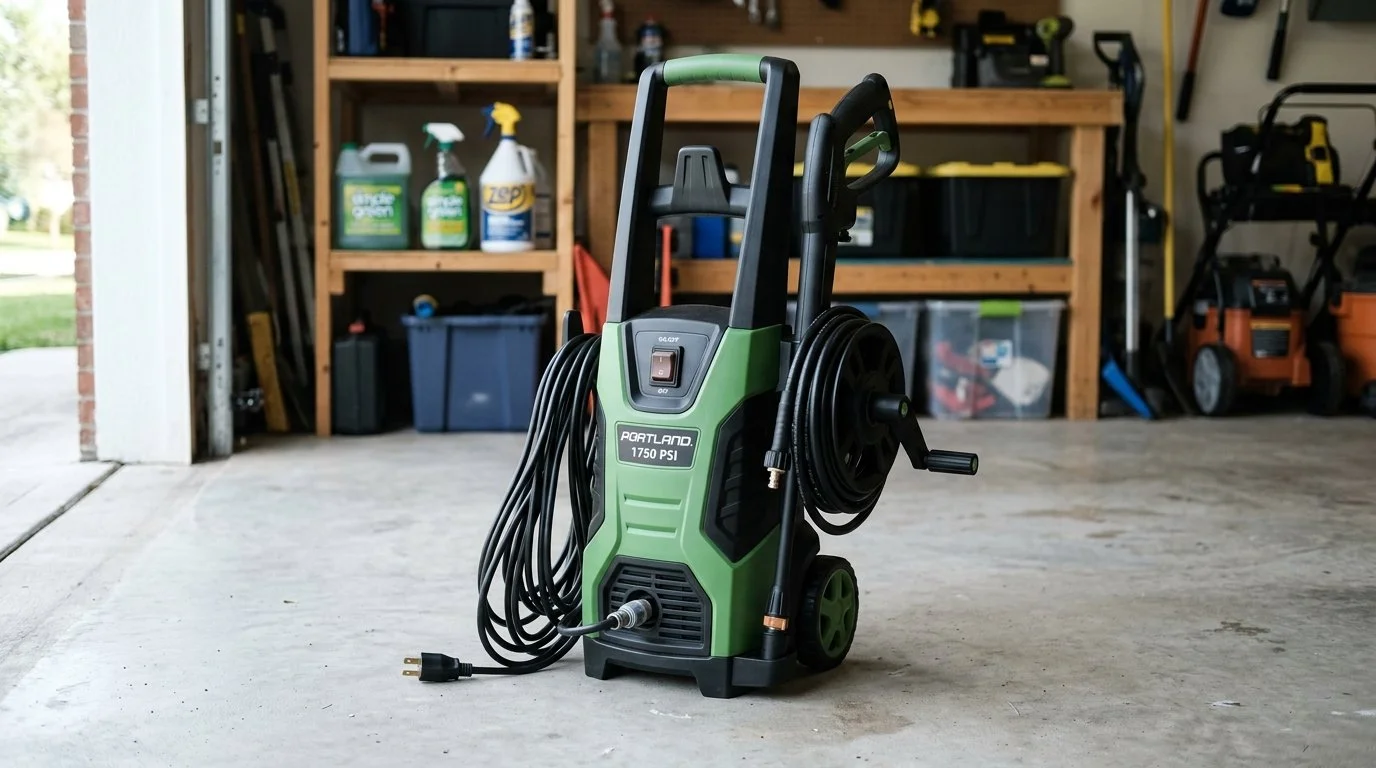
The Portland 1750 is a corded electric pressure washer rated at 120VAC, 60Hz, and 13A. It delivers up to 1,750 PSI at a maximum flow rate of 1.3 GPM.
It has a 35-foot power cord, a 20-foot high-pressure hose, and a GFCI device built into the cord. It does not have an engine, spark plug, fuel filter, carburetor, or engine-oil reservoir.
Turn the power switch off, unplug the washer, shut off the water, point the spray gun in a safe direction, and press the trigger to release stored pressure.
1. The Pressure Washer Will Not Start
Test the Outlet
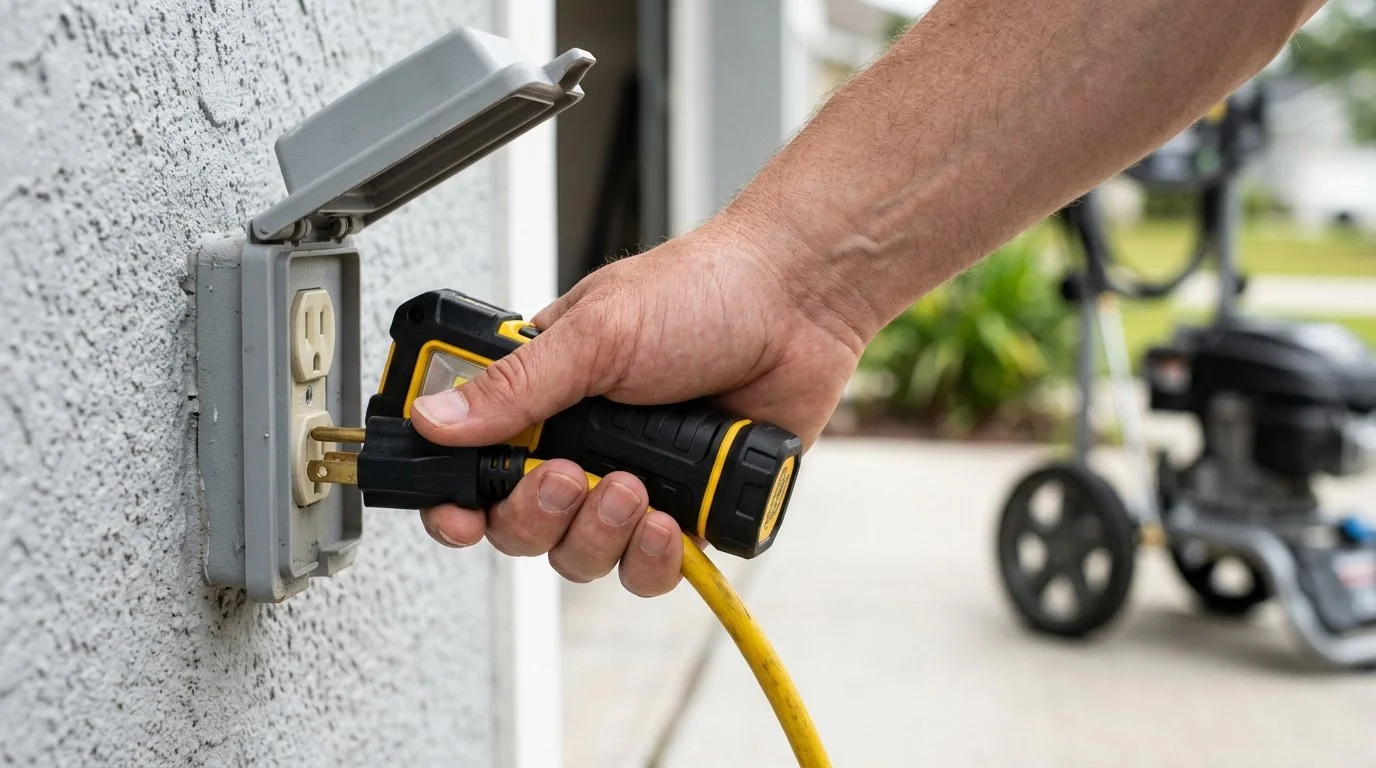
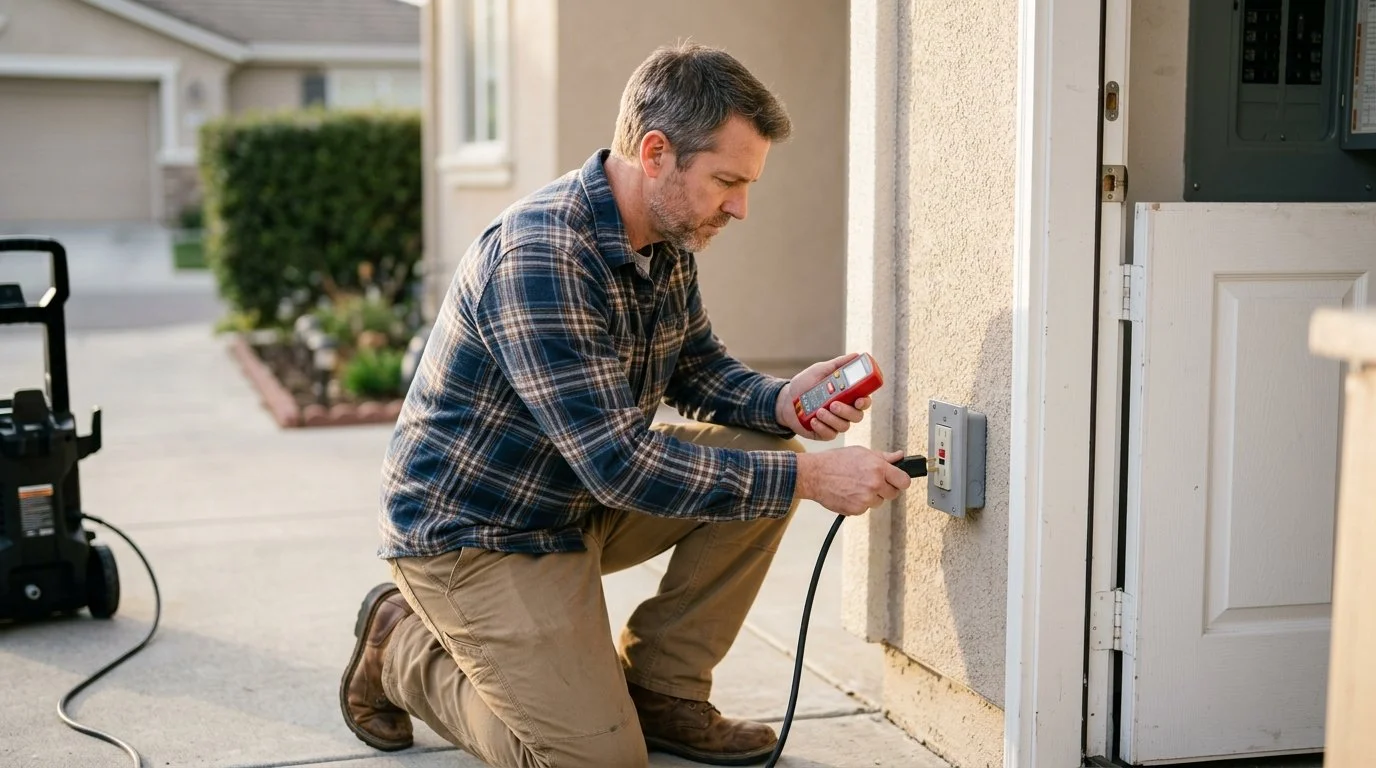
Plug a small working appliance into the same outlet. If the appliance does not run, switch the pressure washer off and inspect the household circuit breaker.
The washer draws 13 amps, so another high-load appliance on the same circuit may trip the breaker. Use an individual grounded branch circuit without other heavy loads.
Reset and Test the GFCI
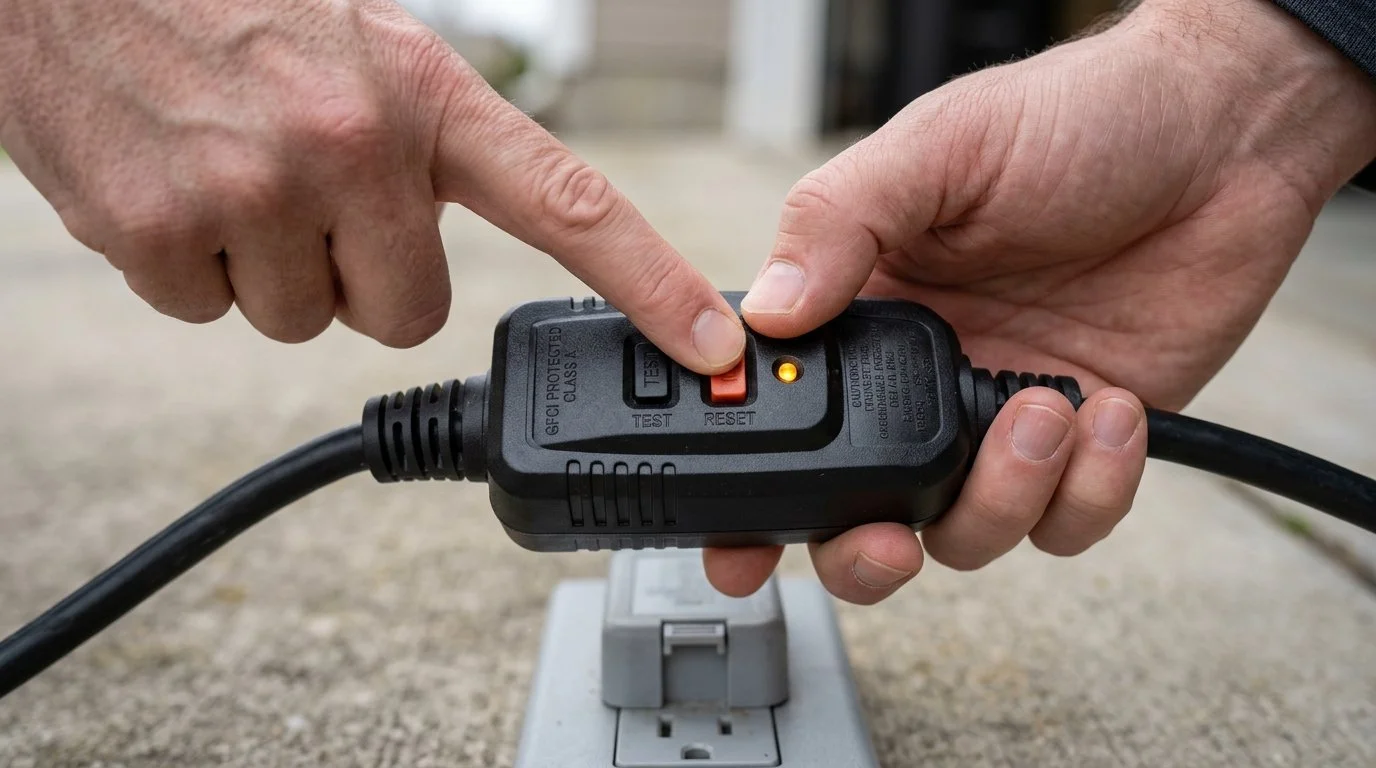
Plug the washer into a dry, grounded 120V outlet and press RESET on the GFCI. The indicator should illuminate.
Press TEST; the indicator should turn off. Press RESET once more, and confirm that the indicator returns before starting the washer.
The manufacturer instructs users not to operate this pressure washer with an extension cord. Keep the GFCI plug dry, off the ground, and connected directly to a suitable outlet.
Know When Electrical Service Is Required
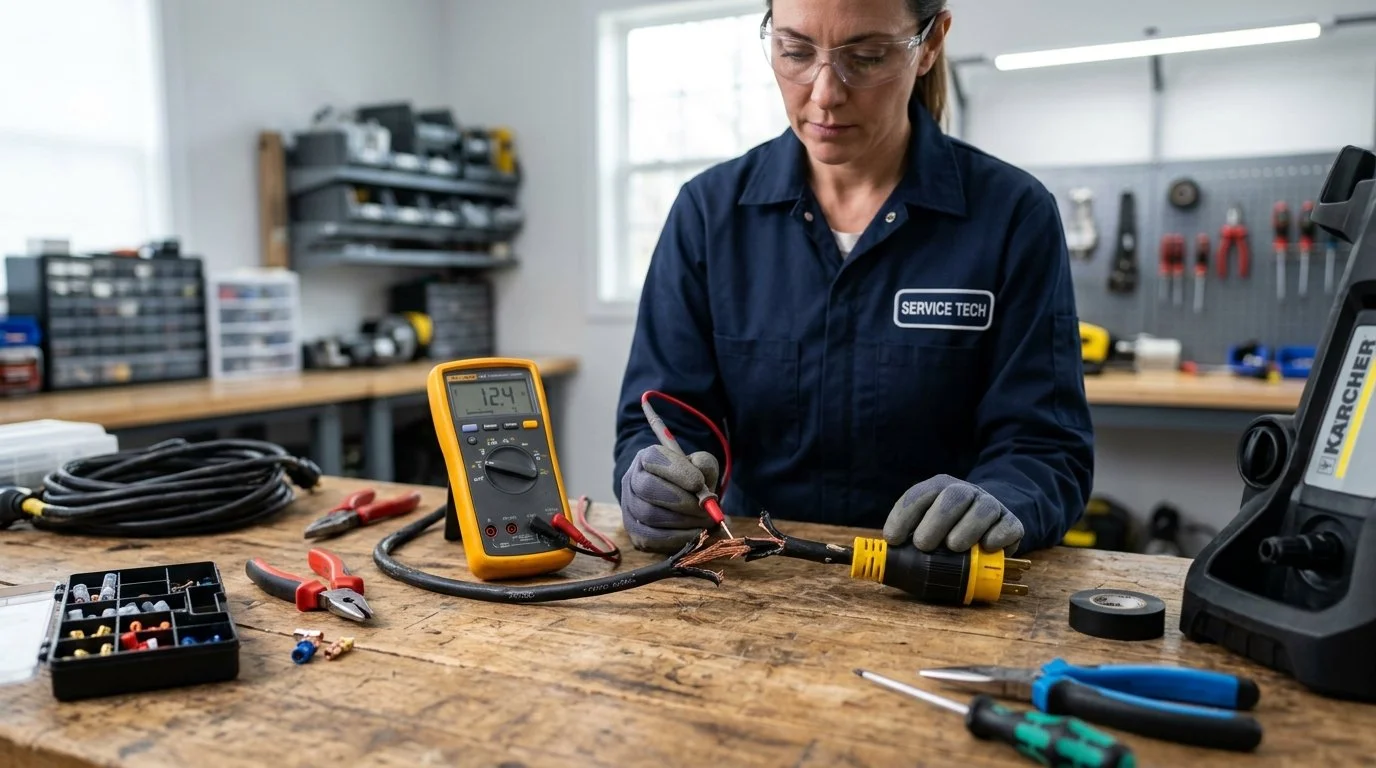
Do not use the washer if the GFCI test fails, the cord or plug is damaged, or the GFCI repeatedly trips. A qualified technician should inspect the cord, switch, carbon brushes, and other internal electrical components.
If the electrical supply is the problem rather than this model, use the broader electric pressure washer troubleshooting steps to isolate the circuit fault safely.
2. The Pressure Washer Stops Suddenly
Turn the power switch off before checking the GFCI. If it has tripped and the machine is dry, reset it once and test the washer again.
If water is leaking from the machine housing, unplug it without touching wet connections and discontinue use. The owner’s manual identifies a housing leak as a shock hazard requiring professional repair.
Do not keep resetting a breaker or GFCI that trips repeatedly. Repeated trips indicate an electrical fault, water intrusion, an overloaded circuit, or internal wear that needs diagnosis.
3. Water Flows but There Is No Pressure
Open the Water Supply Fully
Confirm that the faucet is fully open and that the garden hose is not kinked, leaking, crushed, or blocked. A restricted supply can starve the pump and prevent steady pressure.
The manufacturer recommends a 25-foot supply hose with a 5/8-inch inside diameter. For a hose up to 50 feet long, use a 3/4-inch inside diameter.
Purge Air Before Starting the Motor
Connect the water supply, turn on the faucet, release the trigger safety lock, and hold the trigger until water flows steadily through the nozzle. Then turn the power switch on while continuing to follow the normal startup sequence.
Do not run the pump without water. Dry running can damage the seals.
Clean the Water-Inlet Filter
Turn off and depressurize the machine, disconnect the garden hose, and inspect the filter inside the water inlet. Rinse away dirt without tearing or deforming the screen.
Replace a damaged filter instead of operating without it. Debris entering the pump can cause further wear.
Attach and Clean the Nozzle
The spray gun alone does not create the rated pressure; the nozzle must be attached. If water flows but pressure is weak, make sure the nozzle is fitted securely.
Remove the nozzle after depressurizing the washer, use the supplied nozzle-tip cleaner to loosen debris, and back-flush it with clean water. For a more detailed procedure, see how to troubleshoot a Portland pressure washer nozzle.
4. The Pressure Pulses or Varies
Pulsing pressure usually indicates inconsistent water delivery, trapped air, a clogged filter or nozzle, or a loose connection drawing air into the system.
- Open the faucet fully.
- Straighten and uncoil both hoses.
- Tighten each water connection by hand.
- Hold the trigger with the motor off until the water stream becomes steady.
- Clean the inlet filter and nozzle.
- Shorten an excessively long or narrow supply hose.
If pressure still varies after these checks, internal valves or seals may be worn or sticking. That diagnosis requires a qualified technician; do not open the pump housing as a first troubleshooting step.
Do not confuse normal automatic stopping with rapid cycling. Stopping after you release the trigger is expected; repeated on-off cycling while you hold the trigger indicates a supply, connection, nozzle, or internal problem.
5. The Spray-Gun Trigger Will Not Depress
Check the trigger safety lock at the bottom of the spray gun. Release the lock before squeezing the trigger.
Do not force a trigger that remains stuck after the lock is released. Depressurize the system and have the gun inspected for mechanical damage.
6. Detergent Will Not Dispense
Use only detergent made for pressure washers. Caustic materials, solvents, flammable liquids, and unsuitable cleaners can damage the machine and create a safety hazard.
On this model, detergent is applied through the separate detergent-bottle attachment. Turn the machine off, remove the wand, fill and attach the bottle, and follow the detergent manufacturer’s directions.
Rinse the bottle and its passage with clean water if detergent has dried inside. For bottle, connection, and flow problems, follow the dedicated guide for a Portland pressure washer soap dispenser that is not working.
7. Performance Has Declined Over Time
Mineral buildup can gradually reduce water flow. Clean the nozzle after each use and periodically remove deposits from the water inlet with a suitable demineralizing solution, following the solution manufacturer’s instructions.
After cleaning, drain the solution and rinse the inlet thoroughly before operation. Never immerse the washer or allow water to enter the housing.
Freezing can damage water-filled components. Drain the machine after use and store it in a dry, frost-free location; follow the owner’s manual before using automotive antifreeze for long-term storage.
Safe DIY Checks vs. Technician Repairs
| Safe Owner Checks | Technician Repairs |
|---|---|
| Test a grounded outlet and reset the GFCI | Damaged power cord or GFCI assembly |
| Open the faucet and remove hose restrictions | Internal switch or carbon-brush failure |
| Purge trapped air | Worn or sticking pump valves and seals |
| Clean the inlet filter and nozzle | Water leaking from the machine housing |
| Release the trigger lock | Repeated breaker or GFCI trips after basic checks |
| Rinse the detergent bottle | Abnormal noise, burning smell, or damaged insulation |
Harbor Freight lists product support and replacement-parts options on the official Portland 1750 PSI product page. Confirm the item number on your machine before ordering any part or accessory.
How to Prevent Future Problems
- Inspect the cord, GFCI, hoses, spray gun, and connections before each use.
- Use only cold, clean water and never run the pump dry.
- Uncoil the high-pressure hose completely before operating.
- Clean and back-flush the nozzle after each use.
- Rinse the detergent bottle before storing it.
- Drain remaining water and store the unit above freezing.
- Stop immediately if the housing leaks, the cord is damaged, or the GFCI test fails.
Frequently Asked Questions
Where Is the Reset Button on a Portland 1750 PSI Pressure Washer?
The RESET and TEST buttons are on the GFCI unit built into the power cord. Plug it into a dry, grounded outlet, press RESET, press TEST, and press RESET again before use.
Is It Normal for the Motor to Stop When I Release the Trigger?
Yes. The Portland 1750 pump runs while the trigger is pressed and automatically stops when the trigger is released.
Can I Use an Extension Cord?
No. The manufacturer specifically instructs users not to use an extension cord with this pressure washer.
Why Is My Portland Pressure Washer Pulsing?
Common causes include inadequate water flow, trapped air, a kinked hose, loose connections, a clogged inlet filter, or a dirty nozzle. Worn internal valves or seals are possible when all external checks pass.
Can I Install a Universal Replacement Nozzle?
Do not assume a universal nozzle will fit the original wand. Match the accessory to item 63254 or 63255, or use the compatible quick-connect wand system specified by Harbor Freight.
Conclusion
When a Portland 1750 PSI pressure washer is not working, begin with the outlet and GFCI, then check water delivery, trapped air, the inlet filter, and the nozzle.
These external checks solve the most common operating problems without opening the pump. Stop using the washer and arrange qualified service if water enters the housing, the GFCI repeatedly trips, or internal wear is suspected.