When a ryobi electric pressure washer is not working, the fault usually traces back to a tripped inline GFCI plug, trapped air locking the Total Stop System (TSS) micro-switch, or a clogged spray nozzle tip.
Whether your 1600 PSI, 1800 PSI, 1900 PSI, or 2300 PSI Brushless model refuses to turn on, pulses violently, or loses water pressure, this step-by-step repair guide walks you through every fast fix.
To fix a ryobi electric pressure washer not working, press the reset button on the inline GFCI power cord plug, eliminate light 16-gauge extension cords, purge trapped air from the lines by holding the wand trigger for 60 seconds with the water tap ON and motor OFF, and clean mineral scale from the spray nozzle tip using a thin needle tool.
Fixing a Ryobi Electric Pressure Washer That Won’t Work
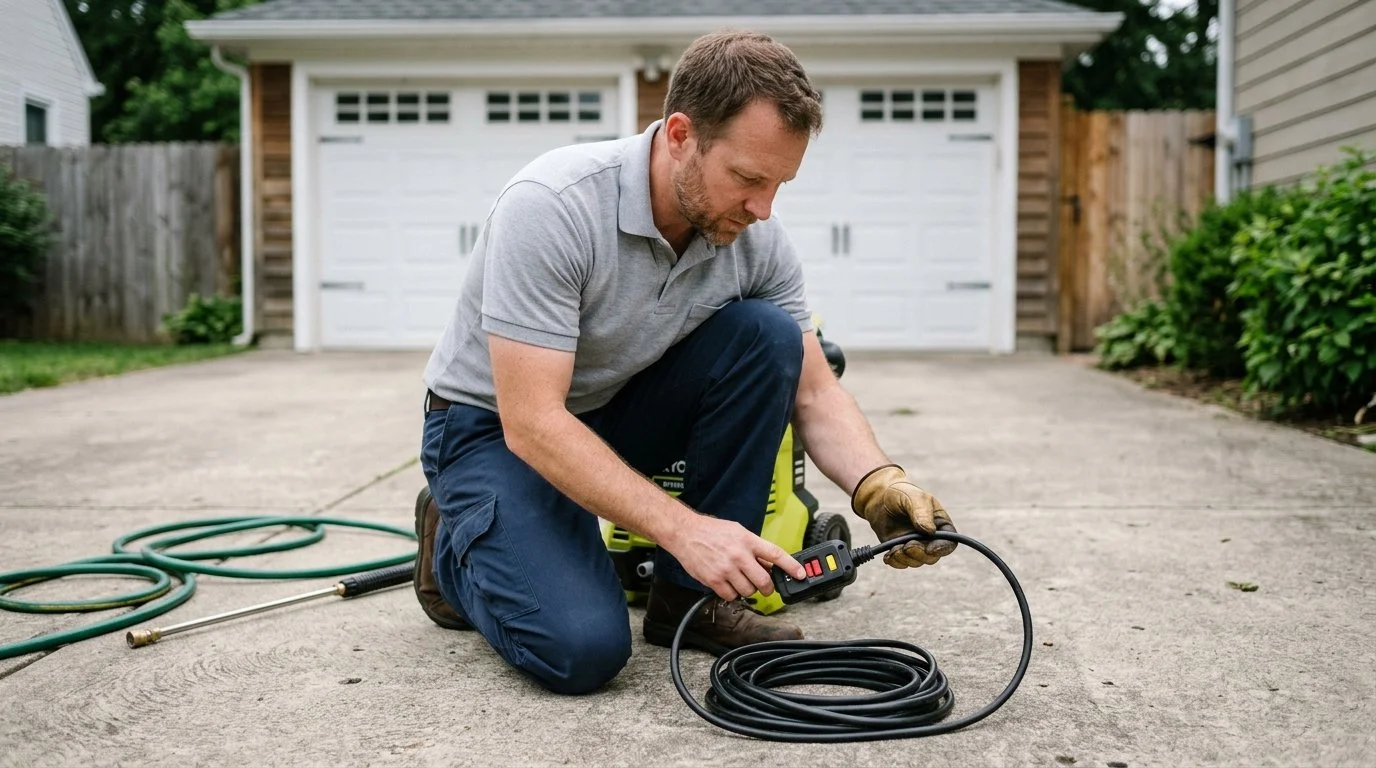
If your Ryobi electric pressure washer is not working, the issue is often due to electrical faults, trapped air, or clogs.
Here’s how to diagnose and fix it step-by-step:
- Check the power source and GFCI
Plug the washer into a working outlet (test with another device).
Inspect the power cord for damage or fraying.
Press the reset button on the inline GFCI plug — this is a common cause of no power.
If the motor hums but won’t start, the GFCI may be tripped or the motor is locked out.
- Purge trapped air before turning on
Never run the motor dry — it can lock pressure and damage seals.
Hold the wand trigger for 60 seconds with the water tap ON and motor OFF to bleed air from the lines.
Only turn the motor on after water flow is established.
- Check water supply and flow
Ensure the water tap is fully open and the garden hose is not kinked.
Inspect the inlet filter screen for debris and rinse or replace it.
If water pressure from the tap source is low, it will reduce output pressure.
- Clear clogs and clean components
Remove mineral scale from the spray nozzle tip with a thin needle tool.
Clean the brass unloader valve if it’s stuck (grease with silicone grease as needed).
Replace the 1/4-inch quick-connect O-ring if water leaks under the pump casing.
- Inspect hoses and connections
Check high-pressure hoses for tears, punctures, or loose fittings.
Replace damaged hoses immediately.
- Motor and pump checks
If the motor is overheated, let it cool for at least 30 minutes before retrying.
Listen for unusual noises; persistent hums or grinding may indicate motor or pump failure.
- Safety tip
Always purge air before powering on to avoid internal pressure locks and ceramic seal damage.
- When to call a pro
If the GFCI resets repeatedly, the motor is damaged, or the pump is seized, professional repair or warranty replacement is recommended.
- Press RESET button on inline GFCI plug.
- Purge air for 60 seconds with water ON and motor OFF.
- Check garden hose tap is open and inlet screen is clean.
- Clear spray nozzle orifice with thin wire pin.
- Allow overheated motor 30 minutes to cool in shade.
By following these steps — starting with the GFCI reset and air purge — most Ryobi electric pressure washers will return to normal operation quickly.
Ryobi Electric Pressure Washer Troubleshooting & Causes
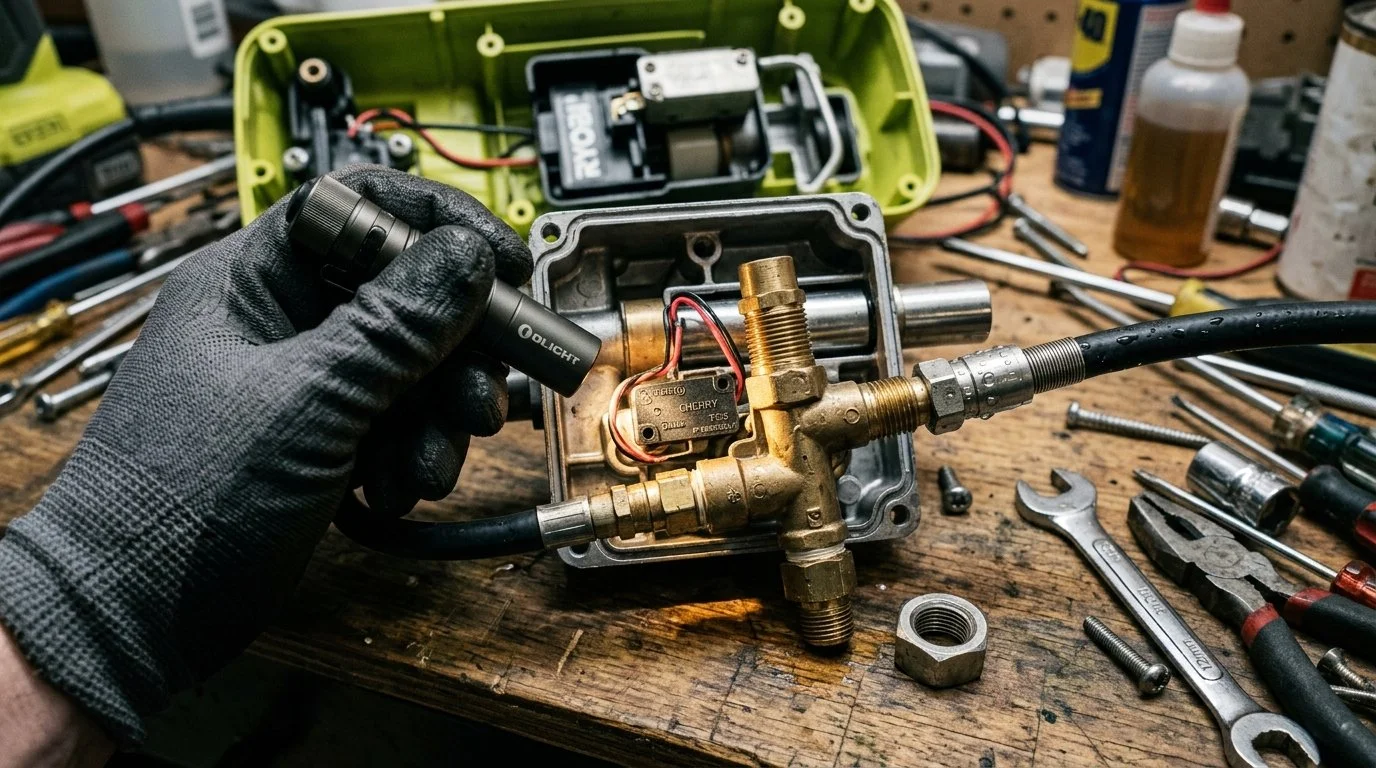
Ryobi electric pressure washers rely on high-amperage 120V electric motors paired with wobble-plate or axial cam pumps.
These machines feature electronic safety sensors, including Ground Fault Circuit Interrupters (GFCI) and Total Stop System (TSS) pressure micro-switches.
The TSS micro-switch automatically cuts power to the motor whenever you release the spray wand trigger.
However, if air is trapped in the pump manifold or line pressure remains locked, the TSS switch will hold the electrical circuit open, causing the machine to appear completely dead.
Never flip the power switch on a Ryobi electric pressure washer before purging trapped air from the water line.
Running an axial pump dry compresses air pockets inside the pump manifold, causing internal pressure locks and burning out ceramic water seals within 30 seconds.
Always bleed water through the wand for 60 seconds before turning on the electrical motor.
| Symptom | Ryobi Model Range | Primary Cause | Fast Fix |
|---|---|---|---|
| Motor Completely Silent / Won’t Turn On | All Ryobi Electric Models | Tripped GFCI plug / Thermal overload lockout | Press GFCI reset button; allow motor 30 mins to cool |
| Motor Hums But Pump Won’t Start | 1600–2300 PSI Models | Trapped line pressure locking TSS micro-switch | Squeeze wand trigger to release pressure while turning power ON |
| Pulsing / Surging Water Pressure | All Ryobi Electric Models | Clogged nozzle tip orifice / Air trapped in pump | Clear nozzle tip with needle pin; purge air without nozzle tip |
| Low or Weak Spray Pressure | 1800 & 1900 PSI Models | Dirty intake filter screen / Stuck unloader valve | Rinse stainless inlet screen; clean and grease brass unloader valve |
| Water Leaking Under Pump Casing | All Ryobi Electric Models | Worn quick-connect O-ring / Freeze damage | Replace 1/4-inch rubber O-ring; inspect manifold for freeze cracks |
How to Troubleshoot a Ryobi Electric Pressure Washer (Step-by-Step Diagnostic Guide)
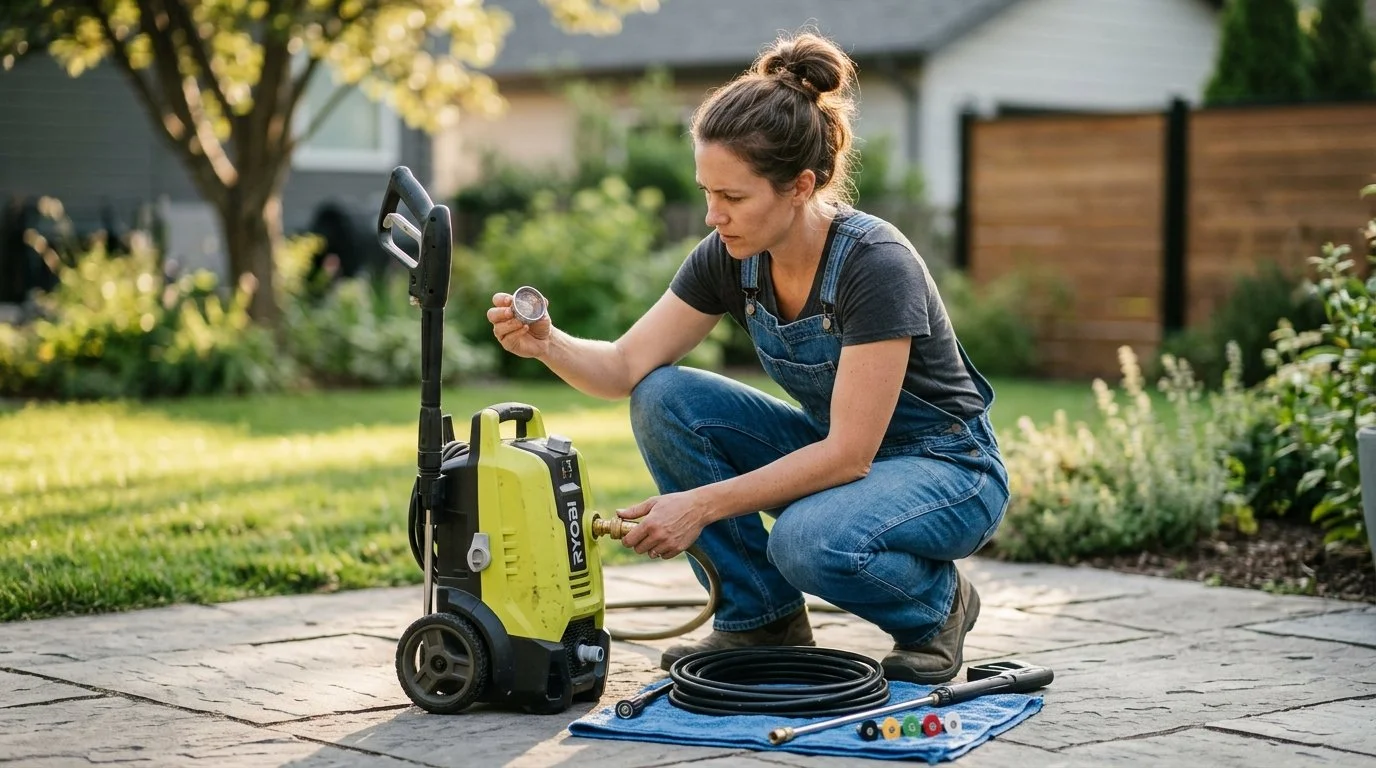
Systematic troubleshooting prevents buying unnecessary replacement parts.
Follow this 4-step diagnostic sequence to isolate your Ryobi pressure washer fault in under 5 minutes:
- Step 1: Inspect Power Cord & Electrical Input
Verify the power cord is plugged into a live 120V outdoor GFCI outlet.
Inspect the LED indicator window on the inline GFCI plug block. If the light is off, press the RESET button firmly. Remove all 16-gauge extension cords.
- Step 2: Verify Water Inlet Supply Rate & Intake Screen
Ensure the garden hose spigot is turned on full blast (minimum 2.5 GPM flow rate).
Unscrew the garden hose brass coupling from the pump water inlet and inspect the stainless steel mesh filter screen for dirt or rust scale.
- Step 3: Inspect Spray Wand Nozzle Orifice
Pull back the brass quick-connect collar on the spray wand and remove the spray nozzle tip.
Inspect the small center orifice for sand, debris, or dried mineral scale buildup.
- Step 4: Test Pump Manifold & Unloader Valve
Observe if water drips beneath the plastic casing while the unit is pressurized.
If the motor runs smoothly but pressure drops immediately upon spraying, inspect the brass unloader valve for mineral corrosion.
How to Fix a Ryobi Electric Pressure Washer: Step-by-Step Repair Guide
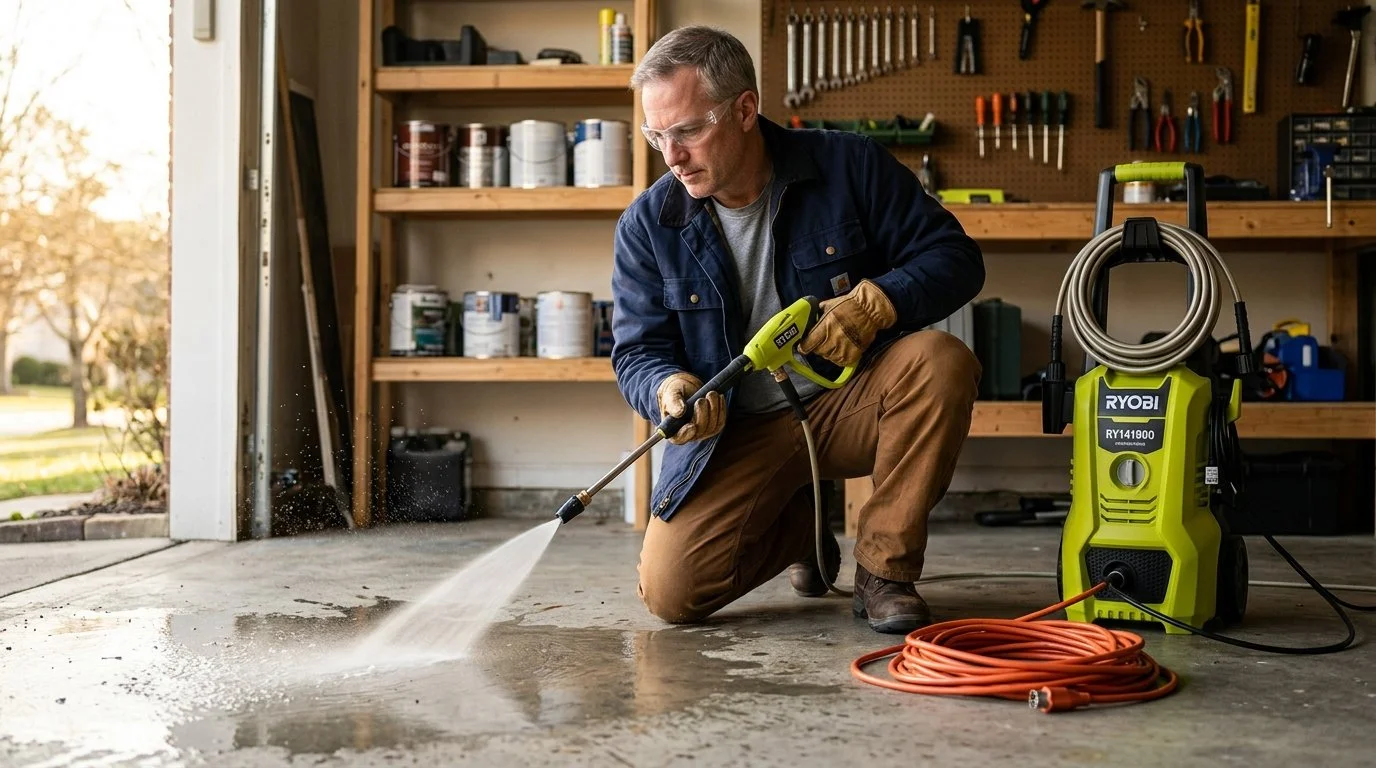
Fix 1: Resetting the GFCI Power Plug & Thermal Overload Switch
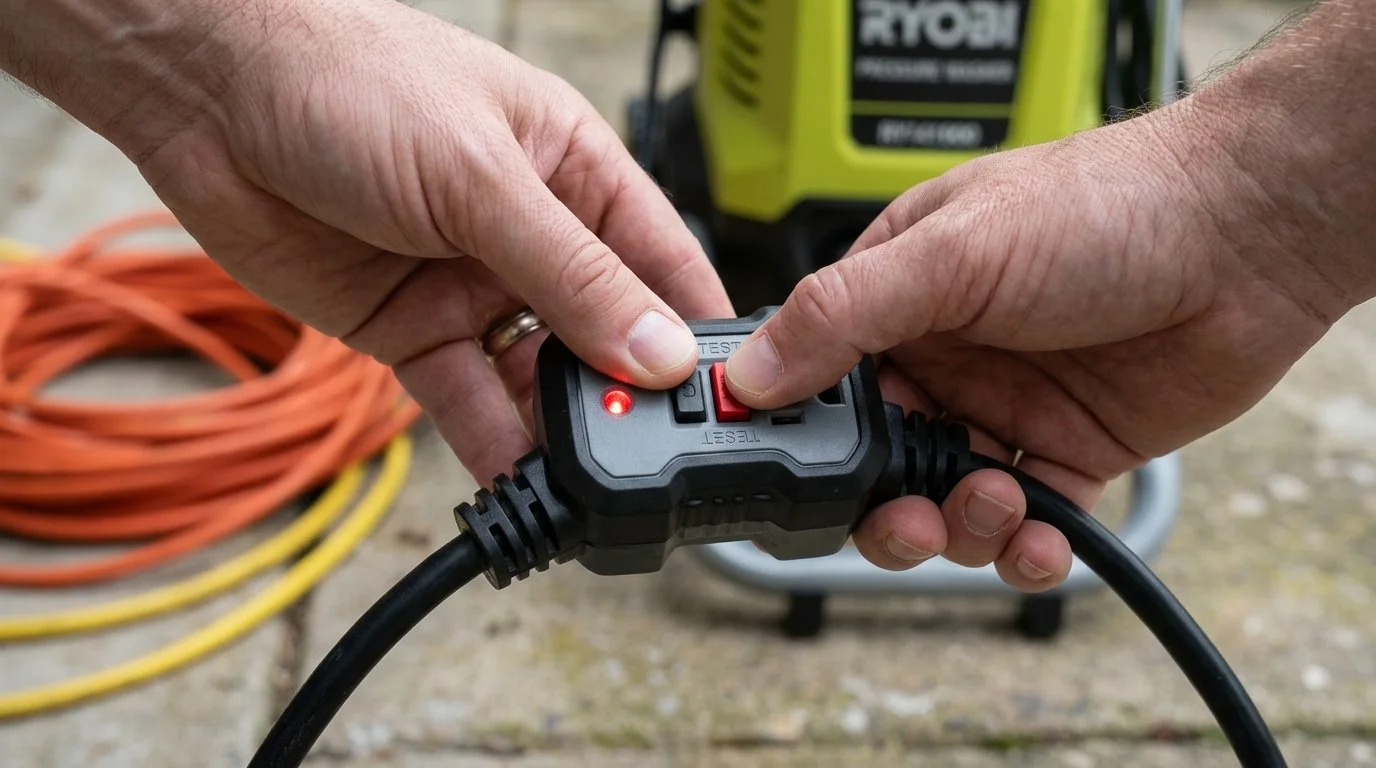
Lightweight 16-gauge indoor extension cords cause severe voltage drop under motor load.
Voltage drops cause the electric motor to draw excessive amperage, tripping the inline GFCI plug or locking out the internal thermal sensor.
Always use a 12-AWG heavy-duty outdoor extension cord under 50 feet, or plug directly into a wall outlet.
- Unplug the pressure washer from any extension cords and plug directly into a grounded 120V wall outlet.
- Press the TEST button on the inline GFCI plug casing, wait 3 seconds, and press the RESET button until the red LED indicator stays lit.
- If the motor stopped after prolonged spraying in hot sun, the internal thermal protection sensor has tripped. Unplug the unit and let the motor cool in the shade for 20 to 30 minutes before turning the power switch ON.
Fix 2: Purging Trapped Air Locks & Relieving Total Stop System (TSS) Pressure
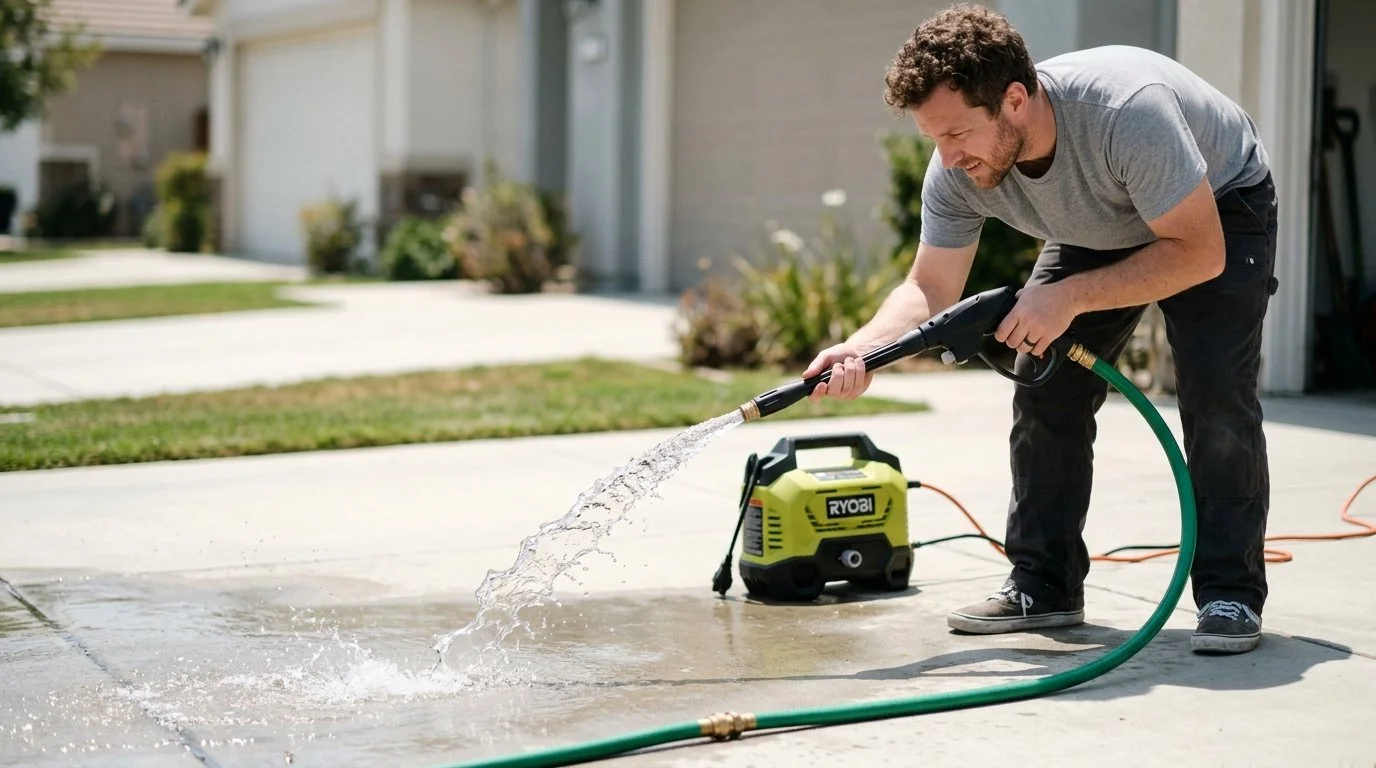
Over 80% of Ryobi electric pressure washer “dead motor” calls stem from trapped air locking the Total Stop System (TSS) micro-switch closed.
Purging air out of the wand before powering on resolves the issue instantly.
- Turn the electrical power switch to OFF.
- Disconnect the spray nozzle tip from the end of the spray wand.
- Turn the garden hose tap on full blast.
- Squeeze and hold the spray wand trigger for 60 seconds without the motor running until water streams out continuously without air sputtering.
- While continuing to hold the spray wand trigger depressed, flip the electrical power switch to ON. The motor will start immediately. Reattach your spray nozzle tip.
Fix 3: Clearing Clogged Quick-Connect Nozzles & Inlet Water Screens
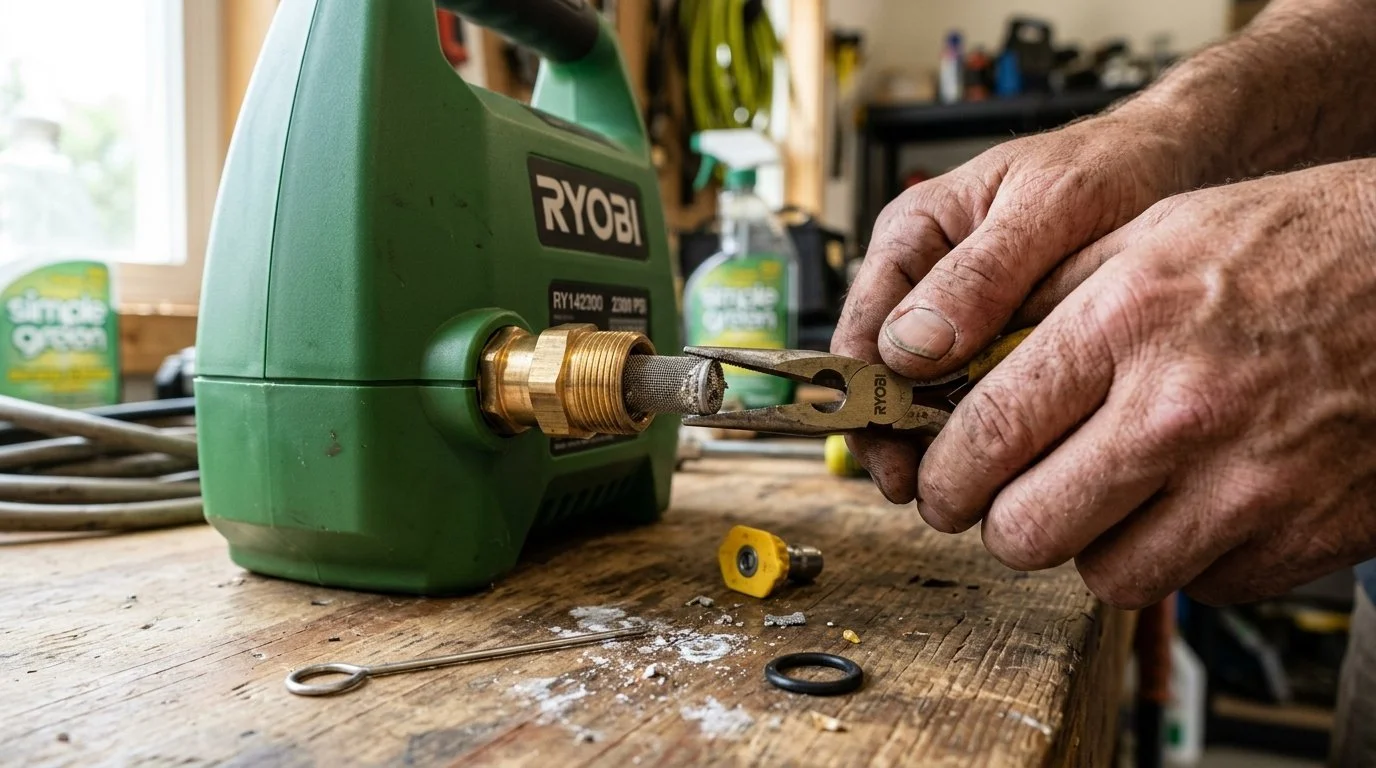
- Turn off the pressure washer and disconnect the spray wand.
- Remove the quick-connect nozzle tip (0°, 15°, 25°, 40°, or Soap tip).
- Insert the thin wire nozzle cleaning pin into the front of the tip orifice to dislodge dirt and calcium deposits, then flush water backwards through the tip.
- Unscrew the garden hose inlet coupler on the washer manifold. Remove the wire mesh filter screen with needle-nose pliers, rinse under warm tap water, and re-seat it into the inlet port.
Fix 4: Servicing & Unsticking the Brass Unloader Valve
- Disconnect power and water, then remove the plastic housing screws to access the pump head.
- Locate the brass unloader valve assembly on the side of the axial pump.
- Unscrew the unloader valve retaining bolt/clip and pull out the internal piston and spring assembly.
- Clean lime scale off the brass shaft using fine brass wire wool, replace cracked rubber O-rings, apply a generous layer of waterproof silicone grease, and reassemble.
Fix 5: Repairing High-Pressure Hose & Spray Wand Water Leaks
- For leaks at the wand quick-connect socket, use a small pick tool to pull out the internal 1/4-inch rubber O-ring and press a fresh high-pressure O-ring into the groove.
- For weeping leaks at the M22 brass hose connection on the pump outlet, wrap the male threads with 2 to 3 turns of PTFE plumber’s tape and hand-tighten firmly.
Greenworks, DeWalt & Stihl Brand Maintenance Guides
If you are troubleshooting additional power equipment or comparing pressure washer motor designs, explore our detailed brand repair guides across the site:
- For low-pressure soap siphoning issues, view our Greenworks Pressure Washer Soap Repair Guide.
- For 20V battery and gas engine diagnostics, read our DeWalt Pressure Washer Troubleshooting Guide.
- For RB gas series and RE electric models, consult our Stihl Pressure Washer Repair Guide.
- For triplex aluminum pump housing checks, read our Blue Clean Pressure Washer Repair Guide.
Top Causes & User Mistakes to Avoid to Prevent Ryobi Washer Failures
Avoiding common operator mistakes will significantly extend the lifespan of your Ryobi electric pressure washer:
- Operating on Lightweight 16-Gauge Extension Cords: Undersized extension cords starve electric motors of voltage, causing thermal overload trips, blown fuses, and permanent motor coil damage.
- Running the Pump Dry Without Water: Turning on the electric motor before turning on garden hose water burns out ceramic plungers and melts water seals in less than 30 seconds.
- Leaving High-Pressure Line Pressure Trapped: Failing to squeeze the spray wand trigger after turning off power leaves 1600+ PSI trapped inside the hose, straining pump seals and jamming the TSS micro-switch.
- Storing Units in Freezing Unheated Sheds: Storing pressure washers in winter with water trapped inside the pump manifold expands, cracking aluminum castings.
What to Do If Your Ryobi Electric Pressure Washer Still Won’t Work (Repair vs. Warranty)
If you have completed all troubleshooting steps and your Ryobi washer still fails to operate, evaluate whether to repair or replace the machine:
- Replacement Pump Assembly Kits: Replacement axial pump kits for Ryobi 1600–2300 PSI electric pressure washers cost between $60 and $110. If the motor runs but the pump casing is cracked from freezing, replacing the pump assembly takes roughly 30 minutes with standard Allen wrenches.
- Ryobi 3-Year Limited Warranty: Ryobi electric pressure washers include a 3-Year Limited Consumer Warranty. If your unit is under 3 years old and suffered motor or switch failure, contact Ryobi Customer Support at 1-800-525-2579 or visit an Authorized Service Center with your receipt for warranty replacement.
- Motor Burnout / Replacement Decision: If the electric motor windings are burned out or shorted internally, replacement motors cost more than 70% of a new pressure washer. Purchasing a new unit is recommended.
How to Prevent Future Ryobi Electric Pressure Washer Blockages (Pro Maintenance Protocol)
Keep your Ryobi electric pressure washer running in peak condition with this seasonal maintenance routine:
- Apply Ryobi Pump Protector Prior to Storage: Connect a bottle of Ryobi Pump Protector to the water inlet before storing the unit for more than 30 days. Squeeze the bottle until lubricant exits the outlet port to coat internal valves and prevent corrosion. For information on U.S. power tool manufacturing, read our guide on What Power Tool Brands Are Made in the USA.
- Winterize in Climate-Controlled Rooms: Always store your electric pressure washer in a heated garage or basement during freezing winter months.
Frequently Asked Questions (FAQs)
How do I reset my Ryobi electric pressure washer when it won’t turn on?
To reset a Ryobi electric pressure washer, plug the power cord directly into a 120V wall outlet (eliminating extension cords).
Press the TEST button on the inline GFCI plug block, wait 3 seconds, and press the RESET button until the LED light illuminates. Then, squeeze the spray wand trigger while turning the power switch ON.
Why does my Ryobi electric pressure washer surge continuously?
Continuous surging is caused by air trapped in the pump manifold or a partially clogged spray nozzle tip.
Turn off the motor, remove the spray nozzle tip, turn water on full blast, and hold the wand trigger for 60 seconds to bleed trapped air. Clean the nozzle tip orifice with a thin wire pin before reattaching.
How do I bleed air out of a Ryobi pressure washer pump?
To bleed air out of a Ryobi pressure washer, connect your garden hose with water turned on full blast, leave the electrical power switch OFF, remove the spray nozzle tip, and squeeze the wand trigger for 60 seconds until a steady stream of water flows out.
Why does my Ryobi pressure washer motor hum but won’t spray?
A humming motor indicates that electrical power is reaching the machine, but the pump is locked by trapped line pressure or a stuck unloader valve.
Squeeze the spray wand trigger to release trapped hydro-static pressure while turning the power switch ON.
Ryobi Pressure Washer Repair Summary & Key Takeaways
Troubleshooting a Ryobi electric pressure washer is quick once you isolate electrical power delivery from water flow faults.
By resetting GFCI plugs, eliminating light extension cords, purging trapped air locks before motor startup, and maintaining the unloader valve, you can keep your Ryobi pressure washer operating at peak PSI performance for years.
- Always press the RESET button on the inline GFCI cord plug before inspecting motor hardware.
- Never operate Ryobi electric pressure washers on thin 16-gauge extension cords.
- Purge air out of the spray wand for 60 seconds with nozzle off BEFORE turning power ON.
- Unstick brass unloader valves using fine wire wool and silicone grease.
- Apply Pump Protector lubricant prior to storing machines for winter.