STIHL pole saw chain not spinning? If the engine or motor runs but the chain stays still, the fault usually sits in the cutting attachment, drive shaft, gearbox, clutch, or battery power system.
Continuing to press the throttle can damage the chain, guide bar, sprockets, or shaft connection. Shut the tool down as soon as the chain slips, grinds, binds, or stops under load.
This guide shows you how to separate a simple bar-and-chain problem from an internal drivetrain failure. For broader starting and performance problems, use our STIHL pole saw troubleshooting guide.

Why Is My STIHL Pole Saw Chain Not Spinning?
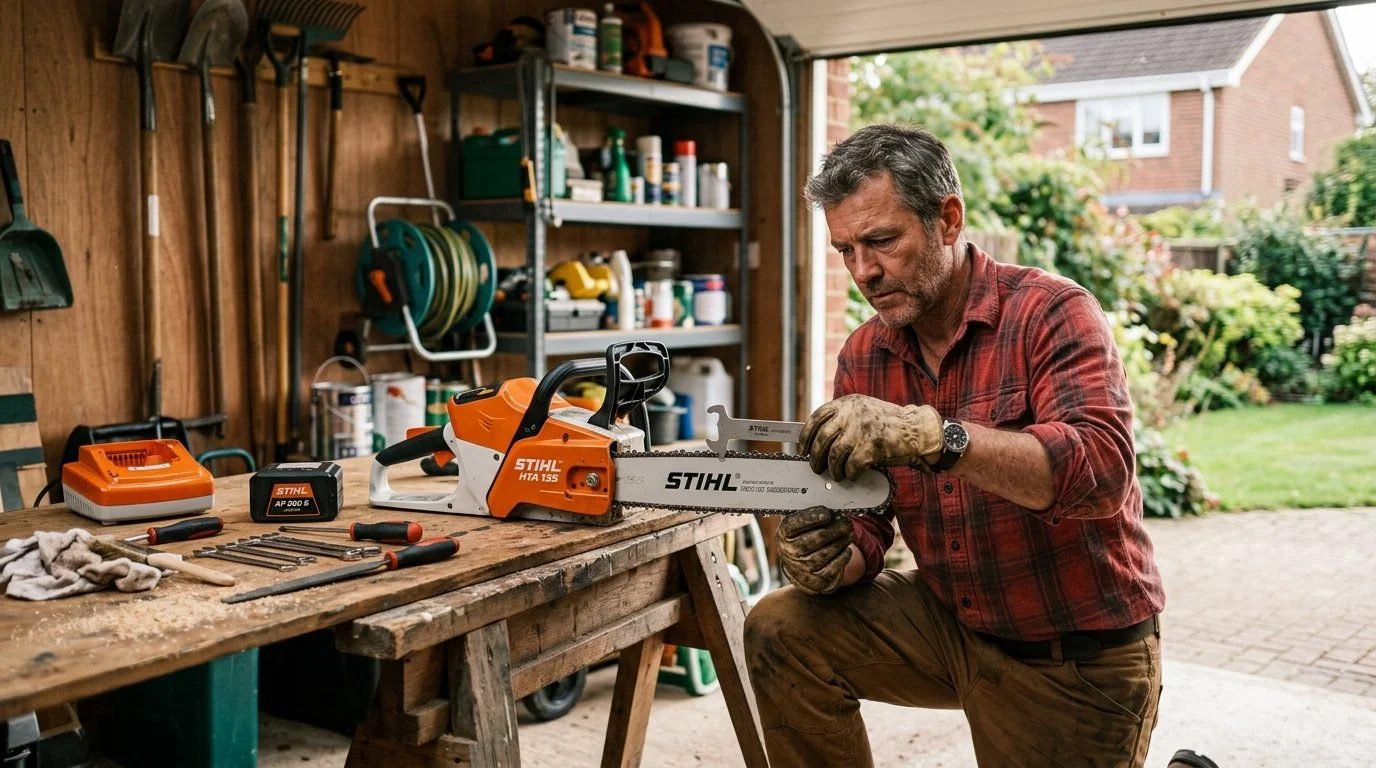
STIHL pole saw chain not spinning? Shut off the tool, disconnect its power source, and check whether the chain moves by hand. Excessive tension, packed debris, a damaged bar or chain, a seized sprocket, poor lubrication, or a disconnected drive shaft can stop it; internal clutch, gearbox, or motor faults require dealer service.
Fixing a STIHL Pole Saw Chain That Is Not Spinning
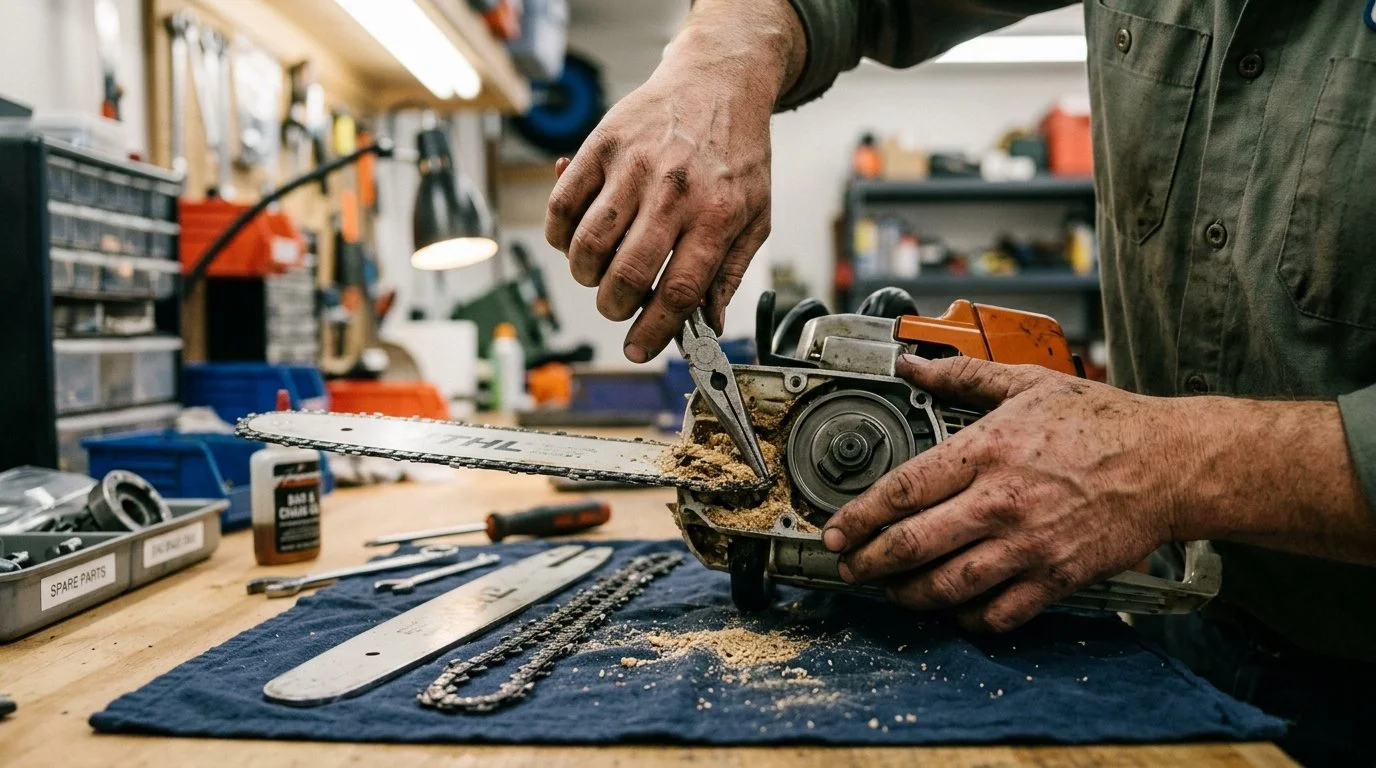
STIHL pole saw chain not spinning usually means the chain is physically bound or the powerhead is no longer transferring power through the shaft and gearbox. First determine whether the chain moves manually, then follow the matching checks below.
1. Disconnect the Power Source
- Stop a gas model and follow its manual before servicing the cutting attachment.
- Remove the battery from an HTA model.
2. Test Chain Movement by Hand
- Wear durable gloves and follow the model manual’s control position.
- A chain that will not move by hand has a cutting-attachment bind.
3. Correct Chain Tension
- Loosen an overtightened chain using the exact procedure for your model.
- Confirm every drive link sits inside the guide-bar groove.
4. Clear the Bar and Sprocket Cover
- Remove compacted chips from the cover, sprocket area, and bar groove.
- Open the oil inlet and outlet passages without damaging them.
5. Inspect the Chain, Bar, and Sprockets
- Look for burred drive links, pinched bar rails, and a seized nose sprocket.
- Replace damaged parts with components approved for the exact model.
6. Verify Chain Lubrication
- Fill the oil tank with suitable bar-and-chain oil.
- Stop using the tool if the chain remains dry after the manual’s lubrication test.
7. Check When the Failure Occurs
- A chain that stops only in wood may be dull, pinched, dry, or receiving weak drive.
- A chain that works collapsed but not extended points toward the telescoping shaft or coupling.
8. Suspect the Shaft, Gearbox, or Clutch
- Grinding, slipping, or intermittent movement suggests an internal drivetrain fault.
- Use an authorized STIHL dealer when diagnosis requires shaft, clutch, gearbox, motor, or controller disassembly.
STIHL Pole Saw Chain Troubleshooting Overview
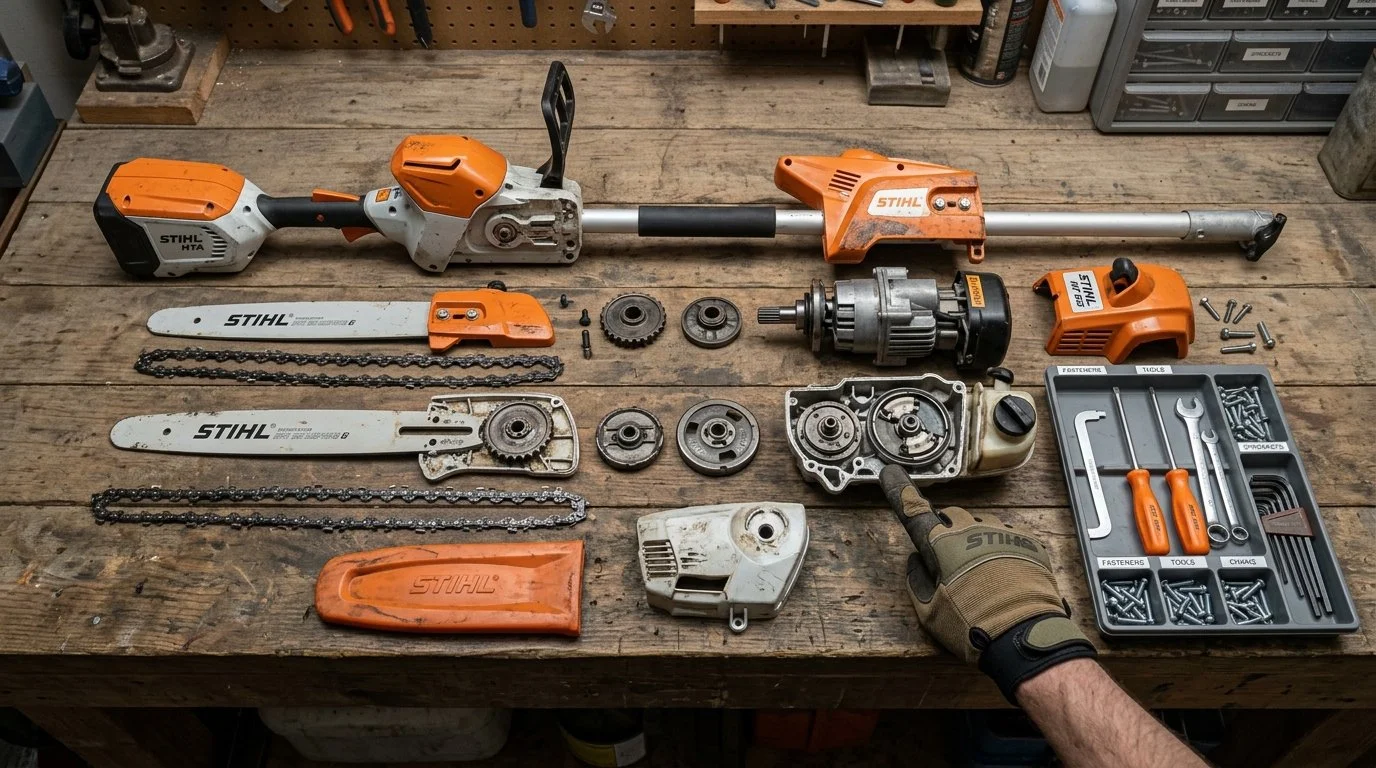
The fastest diagnosis starts with one question: Can you pull the chain around the guide bar by hand after safely disconnecting the power source? The answer separates a physical bind from a power-transfer problem.
- Chain will not move by hand: Check tension, debris, damaged drive links, the bar groove, and nose sprocket.
- Chain moves by hand but not under power: Check the drive sprocket, shaft coupling, gearbox, clutch, motor, or controller.
- Chain stops in the cut: Check chain sharpness, branch pinching, lubrication, engine speed, and drivetrain slip.
- Chain works only when collapsed: Suspect lost engagement inside the telescoping shaft.
- Chain grinds or moves intermittently: Stop testing and inspect the shaft connections and gearbox.
STIHL sells both HT gas-powered pole pruners and HTA battery-powered models. Identify the model on the product label before following any start-control, battery, chain-tension, or service procedure.
Disconnect the Power and Test the Chain by Hand
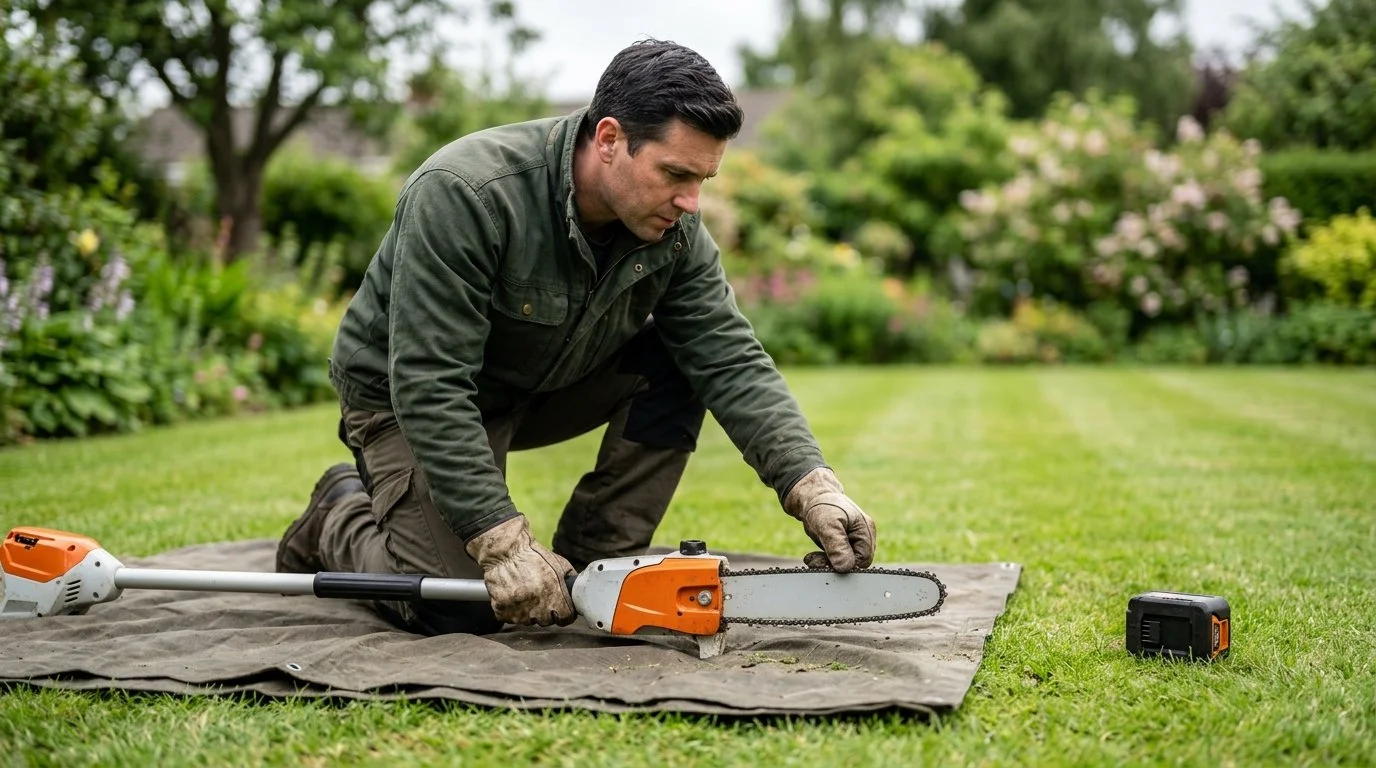
Lower the cutting head to the ground before inspection. Stop a gas model or remove the battery from an HTA model, then wait for every moving part to stop.
Safety warning: Never inspect or tension the chain while the engine or motor can start. Wear durable gloves because the cutters can injure you even when the chain is stationary.
Follow your model manual’s control position before pulling the chain along the bar. Do not force a chain that feels locked because damaged drive links or a seized sprocket can cut your gloves or worsen the damage.
If the chain moves smoothly by hand, the cutting attachment probably is not fully seized. Move to the shaft, gearbox, clutch, battery, or powerhead checks.
Fix a Chain, Guide Bar, or Sprocket That Is Binding
An overtightened chain creates heavy friction and may prevent rotation. A loose chain can leave the bar, damage its drive links, and bind after you reinstall it.
Use the tensioning method in your exact STIHL manual rather than a universal pull-away measurement. The chain should remain seated in the groove while still moving smoothly around the bar by a gloved hand.
- Disconnect the power source and remove the sprocket cover as the manual directs.
- Remove packed chips and oily sawdust from the cover and drive-sprocket area.
- Clean the full guide-bar groove and the accessible oil passages.
- Inspect the chain’s drive links for burrs, bends, cracks, or impact damage.
- Check the bar rails for pinching, spreading, uneven wear, and sharp burrs.
- Confirm the guide-bar nose sprocket rotates freely if the fitted bar uses one.
- Reinstall the chain in the correct direction and set the model-specified tension.
Replace rather than force damaged components. A bent bar, cracked chain component, badly burred drive link, or seized sprocket can bind again at operating speed.
Diagnose the Drive Shaft, Coupling, and Gearbox
A pole pruner transfers power through a long shaft before it reaches the cutting head. That extra drivetrain creates failure points that a standard chainsaw does not have.
Check whether the cutting head, shaft connection, and any detachable coupling sit fully in their specified positions. A loose head or partially engaged connection can create grinding, slipping, and intermittent chain movement.
Chain Works Collapsed but Not Extended
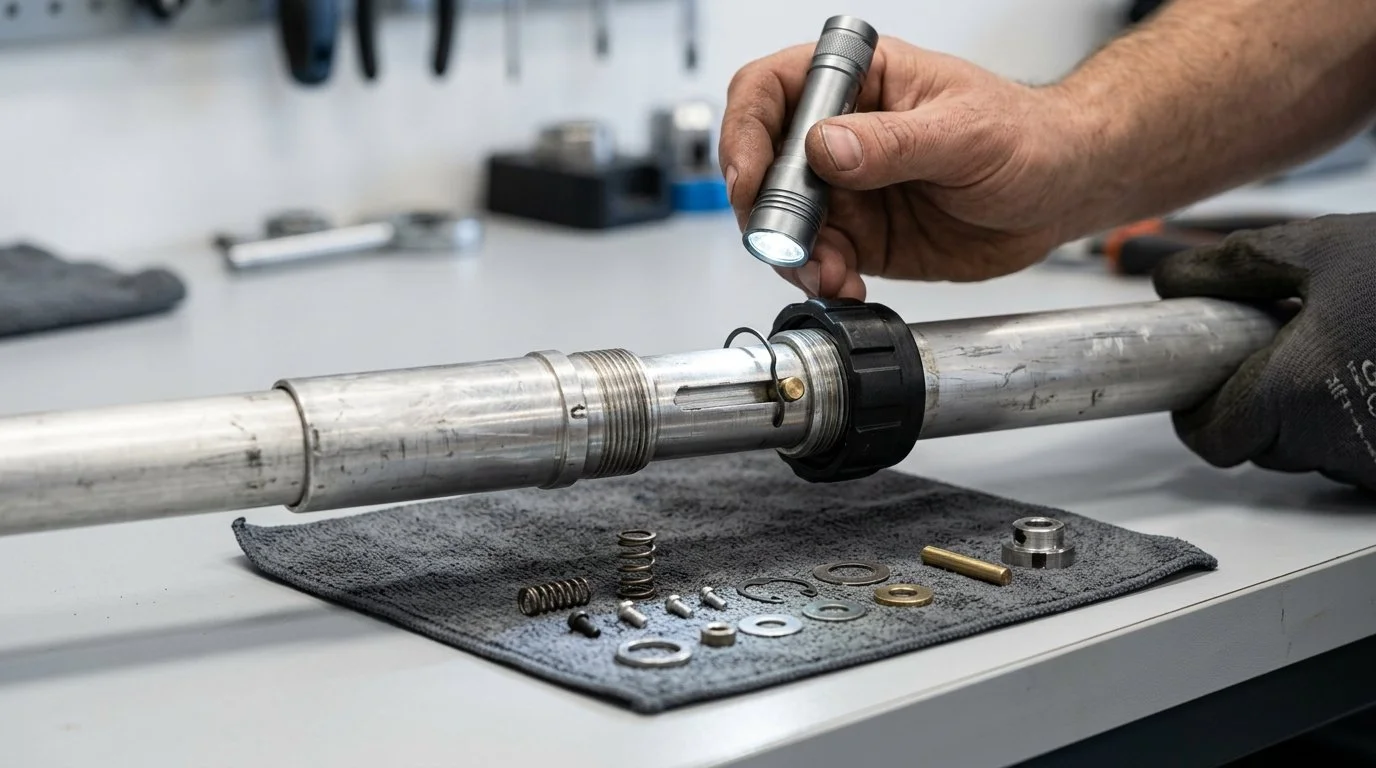
This symptom strongly points toward a telescoping-shaft engagement problem. A worn shaft end, damaged retaining part, displaced support, or coupling that pulls apart during extension can interrupt power to the gearbox.
Do not dismantle a telescoping drive shaft unless the service instructions authorize you to do so. Springs, supports, retaining clips, and keyed parts must return in the correct position.
Chain Moves by Hand but Not Under Power
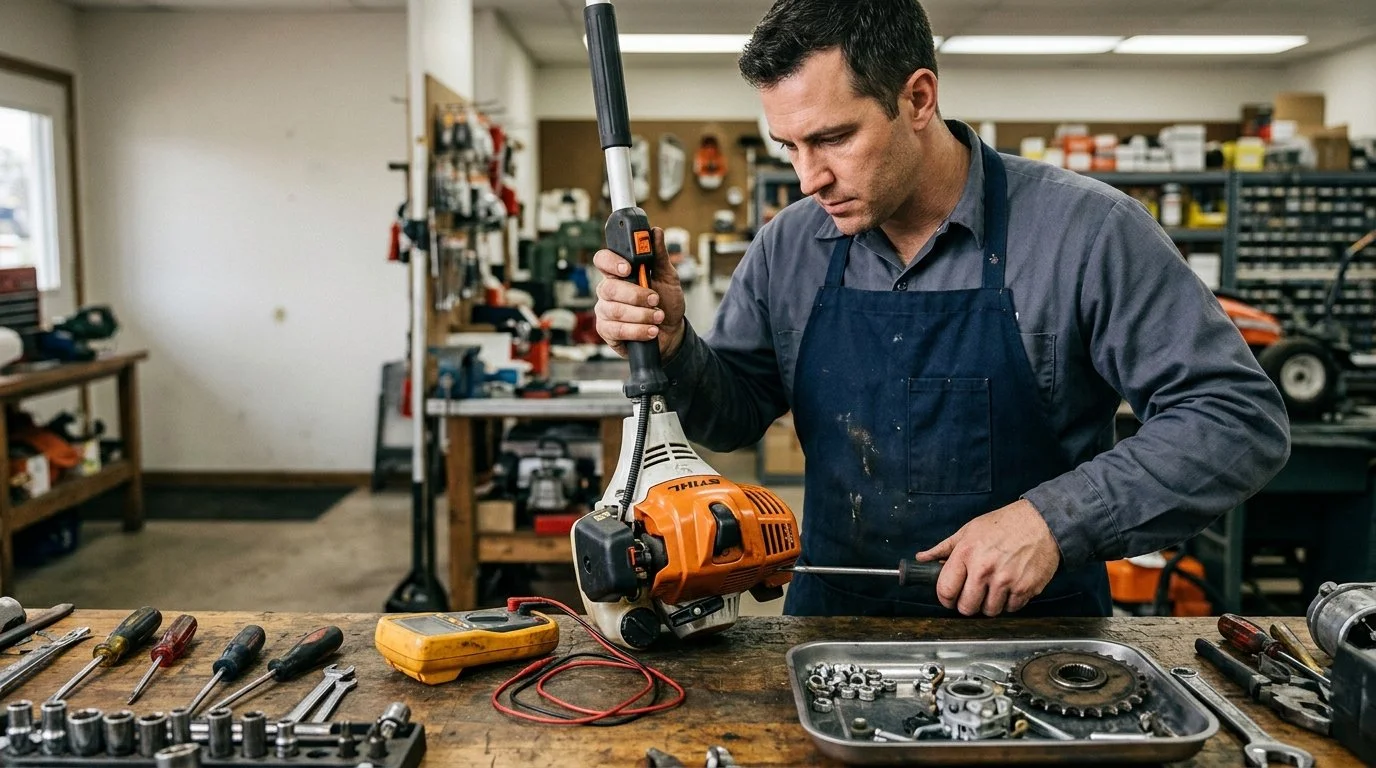
If the chain and nose sprocket move freely, the fault may sit in the drive sprocket, gearbox, shaft, or powerhead. A grinding sound or motion that starts and stops indicates slipping or incomplete engagement.
Stop repeated throttle tests when the drivetrain grinds. Continued testing can round a shaft connection or damage the gearbox.
Check the Gas Clutch or Battery Power System
Gas-Powered STIHL HT Models
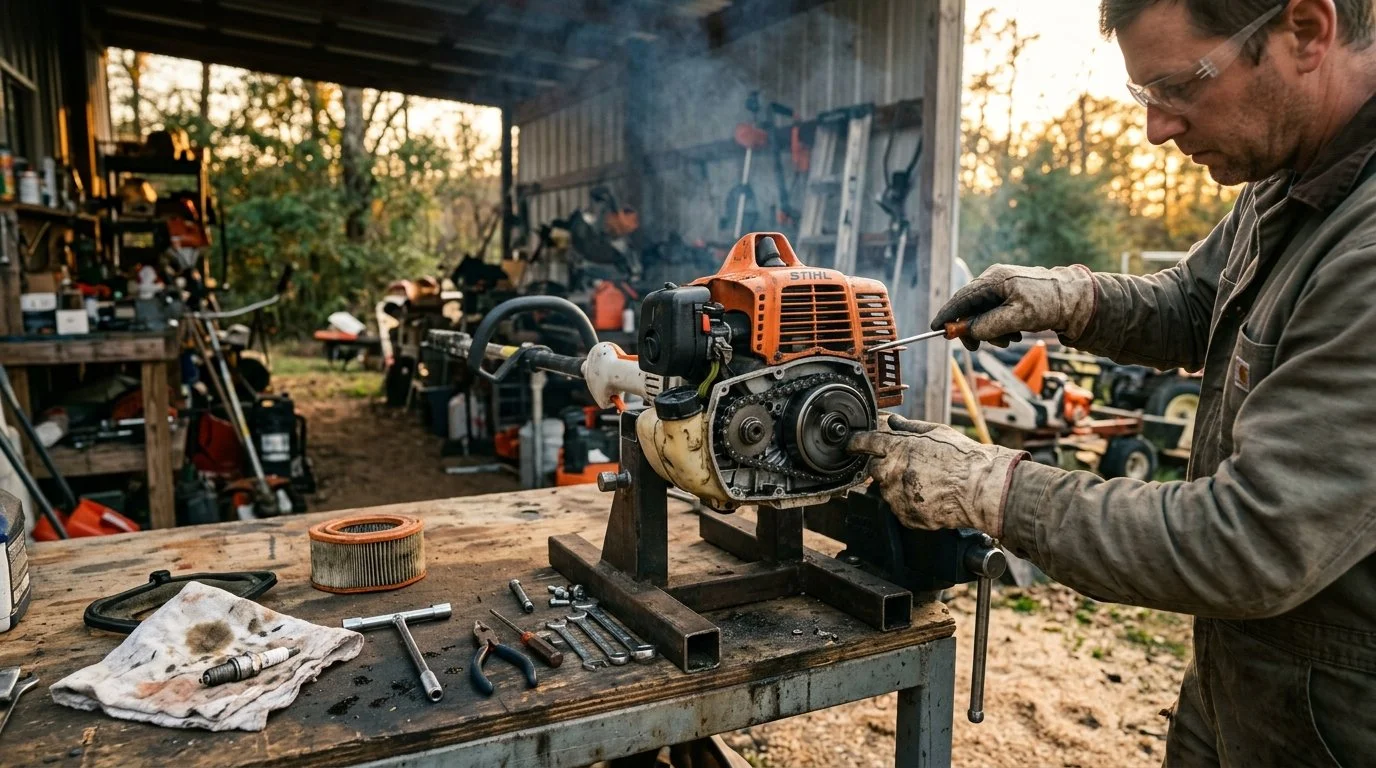
A gas engine that accelerates normally but does not drive a freely moving chain may have a worn clutch, drive connection, or sprocket. These internal parts require inspection when external cleaning and correct tension do not restore movement.
A dirty air filter or worn spark plug can reduce engine power, but neither directly locks the chain. Check them only when the engine starts poorly, bogs, or cannot reach normal operating speed.
Battery-Powered STIHL HTA Models
Charge a compatible battery and install it fully, then use the exact start sequence in the model manual. Inspect the battery and terminals for damage, moisture, dirt, or unusual heat before testing.
Stop if the model displays a persistent fault indication or the motor repeatedly shuts down with a freely moving chain. STIHL manuals direct users to dealer service for internal motor, control, or tool malfunctions.
If the entire tool will not start, separate that problem from a chain-drive failure. The broader STIHL pole saw troubleshooting steps cover starting, fuel, battery, and powerhead symptoms.
Verify Chain Lubrication and Cutting Load
Low oil flow raises friction and heat between the chain and guide bar. Fill the tank with suitable bar-and-chain oil, clean the accessible oil route, and perform the lubrication check described in your model manual.
Stop using the pole pruner if the chain remains dry after you refill and retest it. Our STIHL chain-oiler troubleshooting guide explains how blocked oil paths affect the bar and chain.
A chain that turns in the air but stops against wood may be dull, pinched by the branch, overtightened, or poorly lubricated. It can also reveal a slipping shaft connection, worn clutch, damaged gearbox, or weak powerhead.
Do not force the guide bar through a cut. Support the branch correctly, use a sharp chain, and let the chain reach operating speed before applying a controlled cutting load.
Know When to Contact a STIHL Dealer
Dealer diagnosis makes sense when the chain and bar move freely but power never reaches the drive sprocket. It also protects the tool when shaft or gearbox disassembly requires model-specific parts and procedures.
- The chain works only when the telescoping shaft is collapsed.
- The shaft, coupling, or cutting head grinds or slips.
- The clutch engages inconsistently on a gas model.
- The gearbox input moves but its output does not.
- The drive sprocket shows heavy wear or will not rotate correctly.
- A battery model displays a persistent malfunction indication.
- Chain oil still does not reach the bar after approved cleaning and retesting.
- The chain, bar, trigger, controls, or powerhead has visible damage.
Take the exact model number and a clear description of when the chain stops. Tell the technician whether it moves manually, runs without load, or fails only after you extend the pole.
Prevent the STIHL Pole Saw Chain From Stopping Again
- Check chain tension before work and again after the chain warms.
- Keep the bar-oil tank filled with suitable lubricant.
- Clear chips from the sprocket cover, bar groove, and cutting head after use.
- Inspect the chain’s drive links and guide-bar rails for damage.
- Keep detachable and telescoping shaft connections properly secured.
- Sharpen or replace a dull chain instead of increasing cutting pressure.
- Store the pole pruner clean, dry, and protected by its scabbard.
Regular cleaning makes a new fault easier to identify because debris and incorrect tension have already been ruled out. These habits also reduce friction and stress on the sprockets, gearbox, and shaft.
For storage ideas that protect the cutting attachment and long shaft, see our guide to storing a pole saw safely.
Frequently Asked Questions About a STIHL Pole Saw Chain Not Spinning
Why Does My STIHL Pole Saw Run but the Chain Not Move?
The chain may be overtightened, jammed with debris, or bound by a damaged bar or sprocket. If it moves freely by hand after you disconnect the power, inspect the shaft, gearbox, clutch, motor, and drive sprocket.
Should a Pole-Saw Chain Move Freely by Hand?
A correctly fitted chain should move smoothly around the guide bar by a gloved hand after you safely disconnect the power and follow the model manual. Stop if it catches, locks, or requires heavy force.
Can an Overtightened Chain Stop It From Spinning?
Yes, excessive tension increases friction and can prevent or slow chain movement. Reset the tension using the instructions for your exact STIHL model.
Why Does My STIHL Pole Saw Work Collapsed but Not Extended?
The telescoping shaft may lose engagement as it extends because of a worn shaft end, coupling, retaining part, or internal support. Stop testing if it slips or grinds and have the shaft inspected.
Why Does the Chain Stop When It Touches a Branch?
A dull or dry chain, pinched bar, weak engine or battery output, or slipping drivetrain can make the chain stop under load. Check the cutting attachment first, then investigate the clutch, shaft, gearbox, or motor.
How Can I Tell Whether the Clutch or Drive Shaft Failed?
A freely moving chain with no drive suggests a power-transfer fault, but safe confirmation requires model-specific inspection. Failure that changes with pole extension points more strongly to the shaft or coupling than the clutch.
Conclusion
STIHL pole saw chain not spinning problems usually come from a bound cutting attachment or a drivetrain that no longer transfers power. Check manual chain movement, tension, debris, bar condition, sprockets, lubrication, shaft engagement, and the power system in that order.
Disconnect the power source and perform the hand-movement test first. If the chain moves freely but the shaft, gearbox, clutch, or motor does not drive it, contact an authorized STIHL dealer with the exact model number.